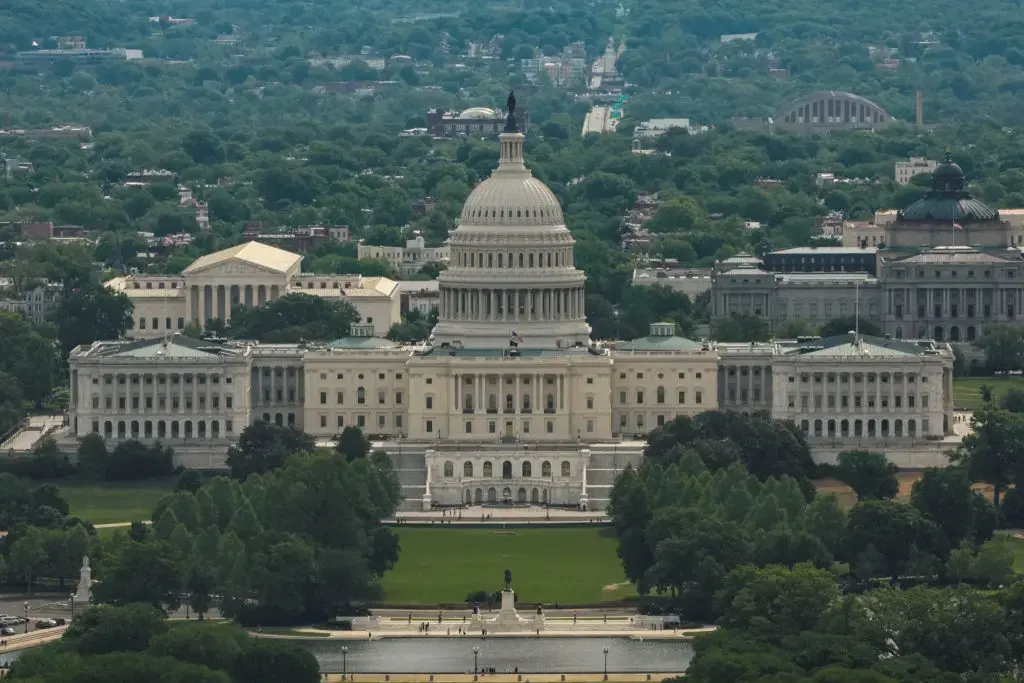
Funding Fears Mount
The US Congress reconvened this week, facing critical deadlines for government funding and national security measures. Lawmakers have a tight schedule ahead, with key decisions to be made by month-end. The session resumes after a brief recess.
Latest news
 Swedish Voters Choose New Parliament as Left-Wing Coalition Projects to Win Majority
 Trump Announces End of US Tariff on Irish Whisky
 Frances Stonor Saunders, Author of CIA Cultural Espionage Exposé, Dies at 66
 Israel and Lebanon to Hold Security Talks in Rome This October
Tensions are running high as Congress tackles a range of pressing issues, including a looming government shutdown and the need to reauthorize critical security programs. The task ahead is complex, with lawmakers struggling to find common ground on contentious issues.
A government shutdown is a real possibility if lawmakers fail to agree on a new spending bill. The current funding measure is set to expire soon, and Congress must act quickly to avoid a disruption to essential services. Senate leaders are pushing for a bipartisan agreement, but differences between the two parties remain significant.
Can Congress Meet Security Demands?
The reauthorization of the Foreign Intelligence Surveillance Act (FISA) is another pressing concern, with implications for national security and individual privacy. Lawmakers are debating the balance between security needs and civil liberties, with some arguing that reforms are necessary to prevent abuses of power.
The consequences of inaction or failure to reach a consensus will be significant, potentially disrupting government services and undermining national security. As the deadline draws near, lawmakers are under pressure to put aside their differences and work towards a solution.
Frequently Asked Questions
What happens if Congress fails to pass a new spending bill? A government shutdown would occur, resulting in the disruption of non-essential services and potentially affecting millions of Americans.
What are the main issues surrounding FISA reauthorization? Lawmakers are debating the balance between national security needs and individual privacy concerns, with some pushing for reforms to prevent abuses of power.
How likely is a bipartisan agreement on the spending bill? While Senate leaders are pushing for a bipartisan deal, significant differences between the parties remain, making a consensus uncertain.