What Drives AfD's Appeal in Eastern Germany?
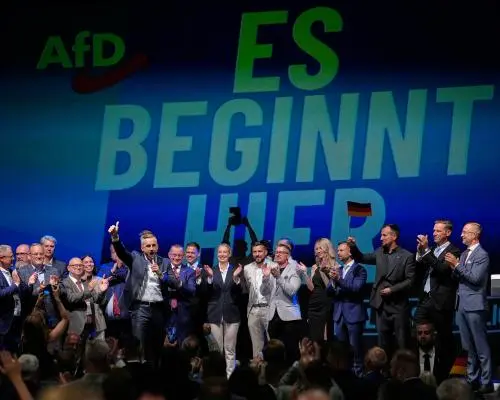
Alternative für Deutschland achieved a historic victory in regional elections, capturing significant support in eastern German states and triggering alarm across the continent. The results, announced in the early hours of Monday, marked the party's strongest showing to date in a state-level vote, with preliminary counts indicating gains in Saxony and Thuringia. Political leaders from France to Poland expressed concern over the implications for democratic stability and European unity.
Latest news
 Swedish Voters Choose New Parliament as Left-Wing Coalition Projects to Win Majority
 Trump Announces End of US Tariff on Irish Whisky
 Frances Stonor Saunders, Author of CIA Cultural Espionage Exposé, Dies at 66
 Israel and Lebanon to Hold Security Talks in Rome This October
The outcome reflects growing voter frustration with mainstream parties on issues including immigration, economic stagnation, and perceived loss of national sovereignty. AfD's campaign emphasized strict border controls and criticism of EU policies, resonating in regions still grappling with post-reunification disparities. France's European affairs minister, Benjamin Haddad, described the result as „a very grave moment for Europe,”warning that such gains could embolden similar movements elsewhere. Analysts note the party's success stems from its ability to channel discontent into a cohesive nationalist narrative, particularly among younger male voters in rural areas.
Can Mainstream Parties Regain Lost Ground?
The party's rise is closely tied to economic anxiety and cultural identity concerns in the former East Germany, where wages remain lower and unemployment higher than in the west. AfD has positioned itself as the voice of those feeling left behind by globalization and rapid social change. Its messaging often frames immigration as a threat to jobs and social cohesion, while portraying mainstream parties as out of touch with ordinary citizens. Recent surveys show that over 40% of AfD supporters in Saxony cite economic insecurity as their primary motivation, while nearly a third point to cultural preservation as a key factor. The party's use of social media to bypass traditional news outlets has also amplified its reach, particularly among voters under 35.
Establishment parties face a difficult task in responding to the AfD surge without adopting its rhetoric or alienating moderate voters. Some suggest focusing on tangible economic investments in struggling regions, while others advocate for stronger civic education to counter extremist narratives. The Social Democrats and Greens have pledged to increase funding for job training programs in eastern states, though critics argue such measures may come too late to affect immediate electoral dynamics. Meanwhile, conservative leaders within the CDU are debating whether to adopt stricter asylum policies to win back disaffected voters—a move that risks further polarizing the political landscape. The coming months will test whether democratic institutions can adapt to this new reality or if the AfD's influence will continue to grow.
Is the AfD now the strongest party in Germany? No, while the AfD made significant gains in state elections, it remains behind the CDU/CSU and SPD in national polling. Its latest victory is regional, not federal.
Frequently Asked Questions
Could this lead to AfD joining a state government? Possibly. In Thuringia, where AfD came close to first place, other parties have ruled out coalitions with them, but pressure may grow if no viable alternatives emerge.
How are European leaders reacting? Many expressed alarm, with officials from France, Poland, and the EU Commission warning that the result threatens democratic norms and could inspire similar far-right advances elsewhere.