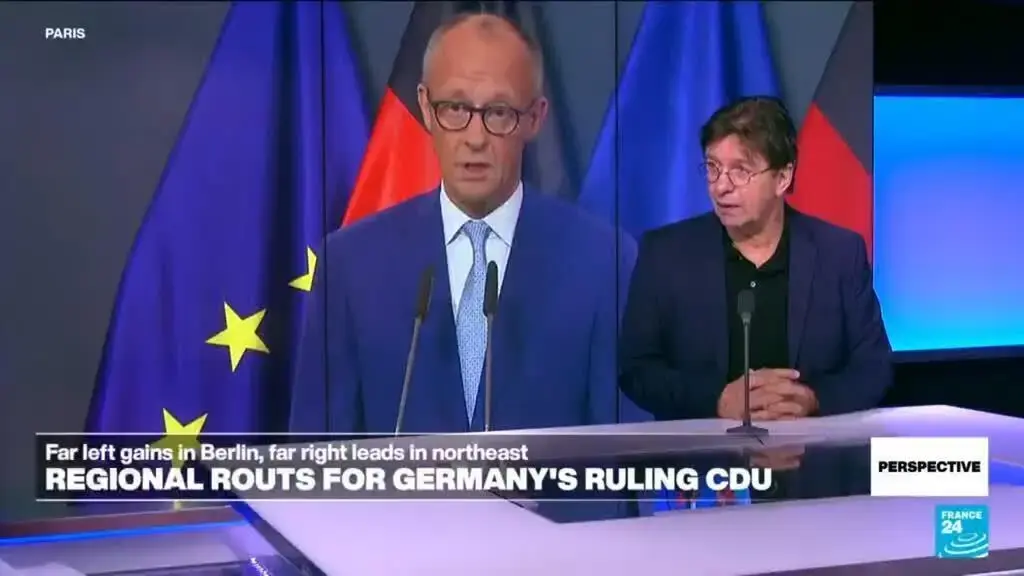
The Party’s Identity Crisis
Hans Stark, a professor at the Paris‑based Sorbonne, said the leader of Germany’s far‑right AfD, Friedrich Merz, faces a highly unstable political position after the party claimed to become the nation’s new governing force. He warned that internal disputes and declining public support threaten the party’s credibility.
Latest news
 Georgescu Detained on Fraud Charges After Presidential Bid
 EU Faces Deadlock Over French Push to Remove Russian Billionaire From Sanctions List
 Greek Stock Market Joins Global Elite Exchanges After Decade of Debt Crisis
 Saudi-led coalition bombs Taiz as Houthis gain ground
Stark made the remark during a recent interview, noting that AfD’s declaration of becoming Germany’s new dominant party coincides with a fragile parliamentary landscape. Merz, who took over the party leadership after a turbulent succession, must navigate coalition talks, voter fatigue, and growing criticism from mainstream opponents. The professor warned that the party’s ambitions outpace its organizational stability.
AfD has long positioned itself as the anti‑establishment voice, yet its recent assertion of being the country’s primary governing force creates a paradox. Members debate whether the label reflects genuine electoral success or a strategic attempt to attract mainstream voters. Analysts point to frequent leadership reshuffles and divergent policy platforms as evidence of an ongoing identity crisis.
Can Merz Survive the Storm?
Merz faces mounting pressure from both within the party and from rival right‑wing factions that accuse him of diluting AfD’s radical agenda. Recent opinion polls show a slight decline in support, while financial constraints limit campaign outreach. Observers argue that his ability to unify the base and present a coherent platform will determine whether he can endure the current turbulence.
If Merz fails to stabilize the party, AfD risks losing its status as the leading anti‑immigration force and may fragment into smaller groups. Conversely, a successful consolidation could strengthen its influence in upcoming state elections and potentially reshape the national political balance. Stark’s caution suggests that the coming months will be decisive for both the party and Germany’s broader political climate.
Frequently Asked Questions
What did Professor Stark mean by saying Merz is in a ‘very, very fragile situation’? He indicated that Merz’s leadership is unstable, facing internal dissent and declining public backing. The party’s recent power grab has not yet been consolidated, leaving it vulnerable.
Why has AfD claimed to become Germany’s new governing party? The party argues that its electoral gains give it a mandate to lead, positioning itself as the alternative to the current coalition. It seeks to capitalize on voter fatigue with mainstream parties.
How might the party’s internal disputes affect its electoral prospects? Frequent leadership changes and policy disagreements could alienate voters and weaken cohesion. As a result, the AfD may see reduced support in upcoming elections.