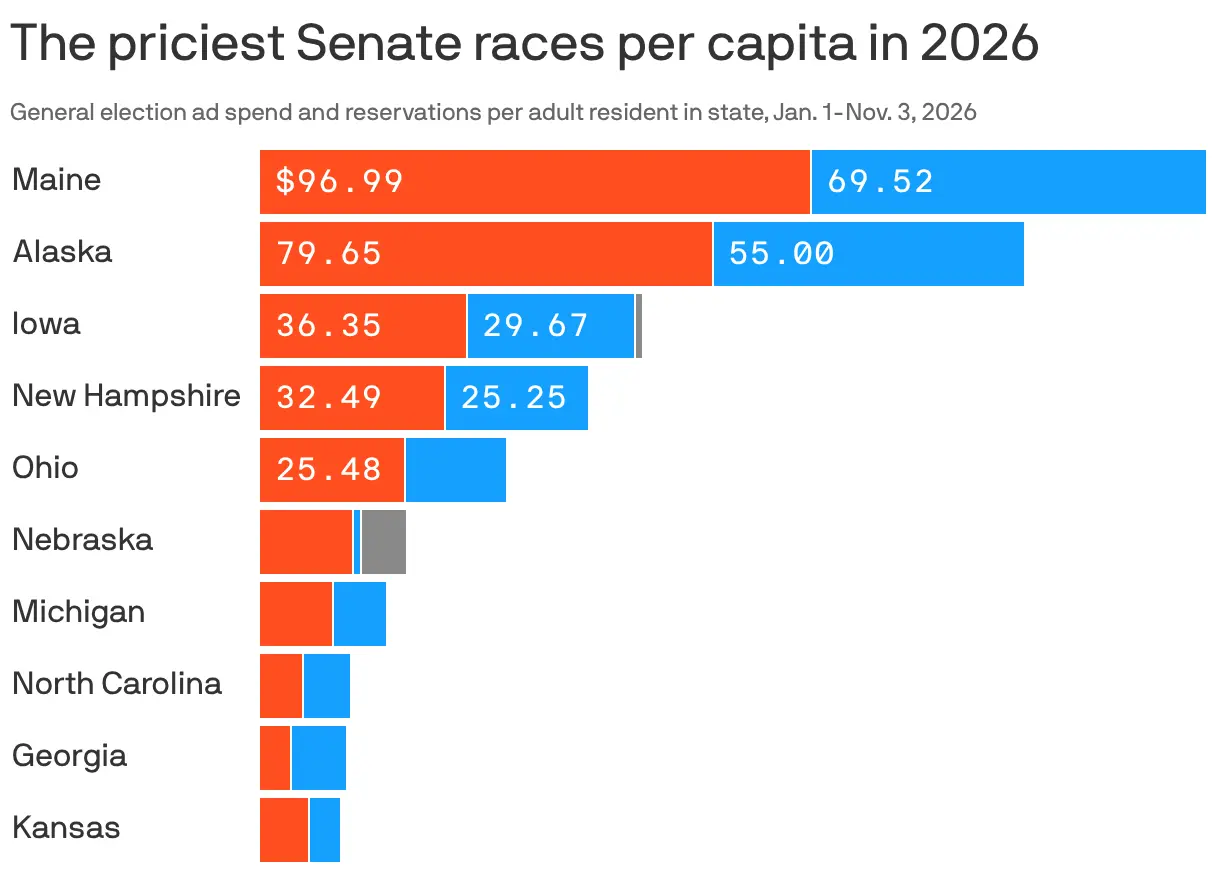
The High Price of Political Influence
Political spending for the 2026 Senate races has reached staggering new heights. Democrats and Republicans are pouring massive budgets into video advertising across broadcast, cable, and social media platforms. This aggressive financial push highlights the intense national focus on securing a majority, with campaign expenditures ballooning to unprecedented levels nationwide.
Latest news
 Leader of Jewish Greens Calls for Polanski to Step Down After Defeat
 EU Unveils Critical Mineral Projects List Focused on Clean Energy Metals
 Navanethem „Navi” Pillay Wins 2026 Nobel Peace Prize for Advancing Global Justice
 The Supreme Court’s recent ruling has reignited the fight against conversion therapy for LGBTQ+ youth
The sheer scale of these expenditures is difficult to visualize. If the combined advertising budgets currently being deployed in Maine were redistributed, every single voting-age resident could receive a $167 voucher for home heating oil. This comparison underscores the immense capital flowing into political messaging rather than direct public services.
Is the Current Spending Model Sustainable?
Analysts note that as streaming services become more popular, the cost of reaching potential voters continues to climb. Campaigns are forced to spend more to cut through the noise of a saturated media environment. This cycle of spending creates a high barrier to entry for candidates and shifts the focus toward fundraising capacity.
The reliance on expensive video campaigns raises questions about the future of political discourse. As costs rise, campaigns may become increasingly dependent on large-scale donors to maintain their visibility. This dynamic could fundamentally alter the landscape of Senate races in the coming years.
Frequently Asked Questions
What platforms are driving these high advertising costs? Campaigns are spending heavily on traditional broadcast and cable television. They are also allocating significant portions of their budgets to social media and various streaming platforms.
Why is the cost of political campaigning rising so rapidly? The increase is largely driven by the need to reach voters across a fragmented media landscape. As audiences move away from traditional TV, campaigns must spend more to maintain visibility on digital platforms.