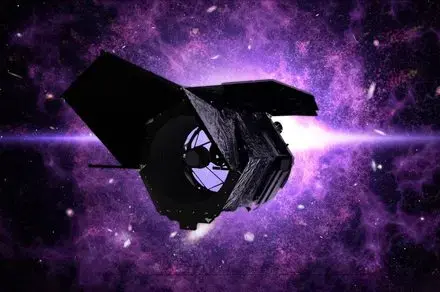
How Roman's Design Helps Earth
NASA's Nancy Grace Roman Space Telescope, slated for launch on August 30, 2026, from Kennedy Space Center, has a surprising dual purpose. Primarily designed to unravel the secrets of dark matter and dark energy, this advanced observatory could also play a crucial role in safeguarding Earth from dangerous asteroids. Its unique design offers unexpected benefits.
Latest news
 Swedish Voters Choose New Parliament as Left-Wing Coalition Projects to Win Majority
 Trump Announces End of US Tariff on Irish Whisky
 Frances Stonor Saunders, Author of CIA Cultural Espionage Exposé, Dies at 66
 Israel and Lebanon to Hold Security Talks in Rome This October
The telescope's main mission involves peering into the universe's most enigmatic components. Scientists hope to gain unprecedented insights into the invisible forces shaping our cosmos. This ambitious undertaking aims to answer fundamental questions about the universe's expansion and structure.
The Roman Space Telescope boasts an exceptionally wide field of view. This capability, essential for its dark energy studies, allows it to survey vast swathes of space in a single observation. This broad perspective is precisely what makes it ideal for spotting potentially hazardous asteroids.
Will Roman Revolutionize Asteroid Tracking?
Traditional asteroid-hunting telescopes often have narrower fields of view. They must scan the sky in smaller segments, which can be time-consuming. Roman's expansive vision could significantly speed up the detection of near-Earth objects. Early detection is critical for any planetary defense strategy.
While not its primary function, Roman's potential contribution to asteroid defense is substantial. Its ability to quickly map large areas of the sky means it could identify more asteroids, more rapidly. This would provide crucial lead time for scientists to assess threats and plan potential mitigation efforts. The telescope's advanced optics will also offer high-resolution imaging, improving our understanding of asteroid characteristics.
This unexpected capability adds another layer of importance to the Roman Space Telescope. It highlights how scientific instruments, built for one purpose, can often yield unforeseen advantages. The mission promises to expand our knowledge of the universe while potentially enhancing our planet's security.
Frequently Asked Questions
What is the primary mission of the Roman Space Telescope? The Roman Space Telescope's main goal is to study dark matter and dark energy. These invisible components are believed to make up most of the universe's mass and influence its expansion.
How does the telescope help detect asteroids? The telescope has a very wide field of view, allowing it to observe large areas of space at once. This makes it efficient at scanning for and identifying asteroids that might pose a threat to Earth.
When is the Roman Space Telescope expected to launch? The Nancy Grace Roman Space Telescope is scheduled to launch on August 30, 2026. It will lift off from Kennedy Space Center.