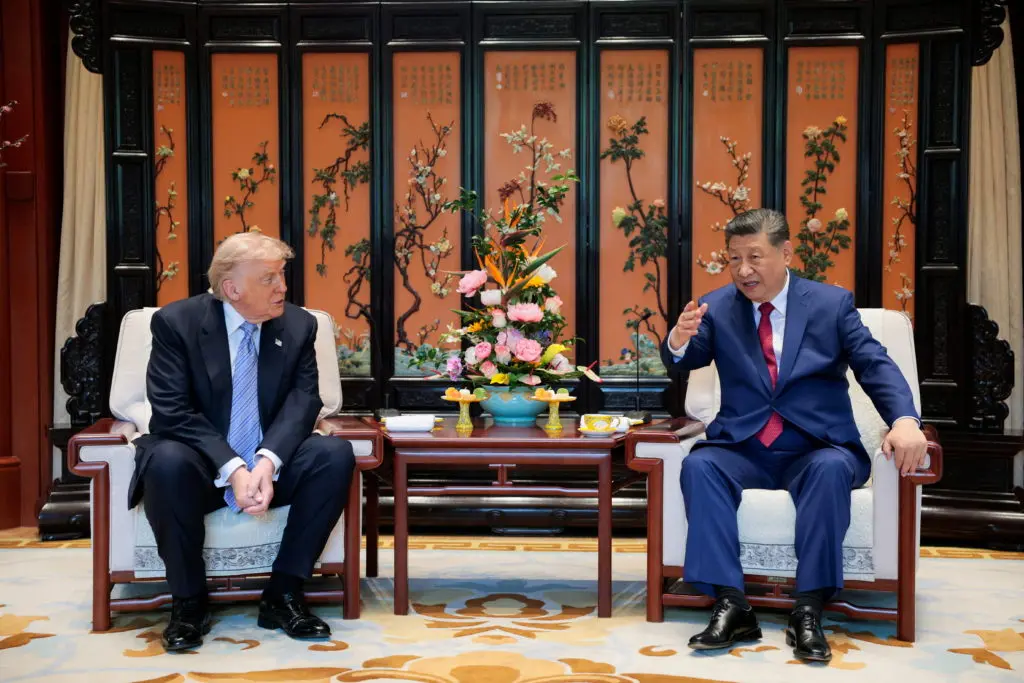
Trump and Xi are expected to explore ways to manage risks without undermining
American President Donald Trump and Chinese President Xi Jinping will meet this week to address shared worries about artificial intelligence risks as both nations push for technological leadership. The talks come amid intensifying competition between Washington and Beijing over AI development, with each side recognizing that unchecked advancement could pose serious dangers. Officials from both countries have acknowledged the need for dialogue despite their strategic rivalry. The meeting follows growing alarm among scientists and policymakers about the potential misuse of advanced AI systems, including autonomous weapons and large-scale disinformation campaigns. While the U. S. has imposed export controls on AI chips to slow China’s progress, Beijing has accelerated domestic innovation through state-backed research initiatives.
Latest news
 Global Diplomacy Prepares for the 2026 UN Leadership Transition
 Donald Trump Proposes Long-Term Security Oversight for Greenland
 Tensions Escalate Between Washington and Tehran During UN General Assembly
 Stock Market Futures Hold Steady Following Strong Monday Rally
Trump and Xi are expected to explore ways to manage risks without undermining their respective national AI strategies, reflecting a rare point of alignment in an otherwise tense relationship. Can Competing Powers Agree on AI Guardrails? Both governments have expressed interest in establishing basic safety protocols for AI development, though they differ sharply on enforcement and transparency. Washington favors voluntary frameworks led by industry and allied nations, while Beijing insists on state oversight and non-interference in internal affairs. Experts note that any agreement would likely focus on narrow, technical issues like preventing AI-driven cyberattacks rather than broader governance. Still, even limited cooperation could reduce the chance of accidental escalation in critical areas like nuclear command systems. What Are the Risks of Unchecked AI Development? Unregulated AI progress raises concerns about systems making irreversible decisions without human oversight, particularly in military contexts.
Studies show that advanced language models can generate convincing false
Studies show that advanced language models can generate convincing false narratives at scale, threatening electoral integrity and social stability. Additionally, the race for AI supremacy may encourage shortcuts in safety testing, increasing the likelihood of unpredictable behavior in complex environments. Leaders warn that without mutual understanding, mistrust could fuel a dangerous action-reaction cycle. Frequently Asked Questions Why are Trump and Xi meeting now? The meeting responds to rising fears that uncontrolled AI advancement could threaten global stability, prompting both leaders to seek dialogue despite their broader strategic competition. What specific safety concerns do both sides share? Washington and Beijing worry about AI-enabled disinformation, autonomous weapons systems, and the potential for AI to destabilize financial or defense infrastructure if not properly managed. Is a binding AI treaty likely between the U. S. and China?
No, analysts say any outcome will likely be informal and limited to technical risk reduction rather than a formal treaty, given deep disagreements over governance models and verification.