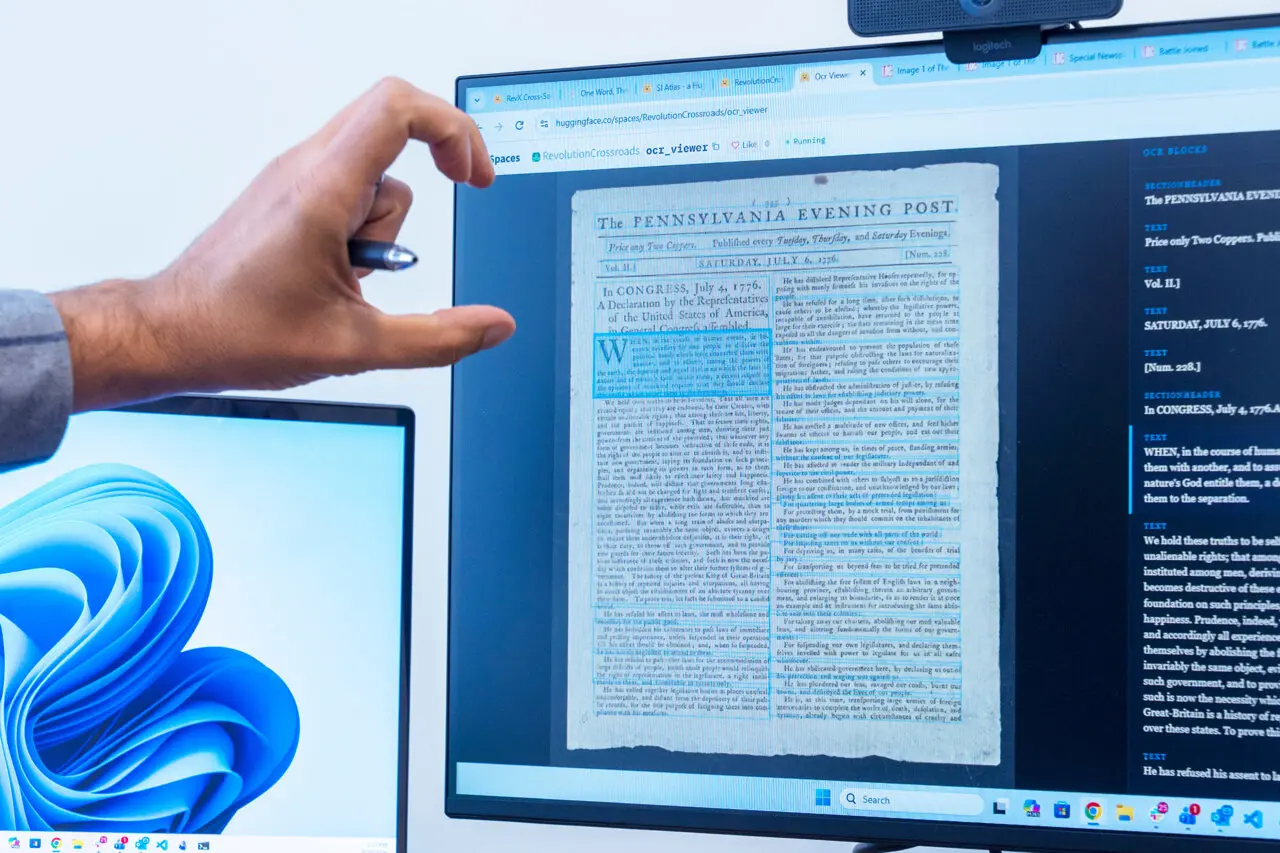
Mapping the Threads of Independence
Smithsonian researchers in Washington are leveraging artificial intelligence to modernize the study of American Revolution artifacts. Data scientist Mike Trizna demonstrated the initiative this September by showcasing digitized versions of the Declaration of Independence. This project aims to link fragmented historical records through advanced computational analysis and machine learning.
Latest news
 Housing Crisis Threatens Spanish Government Stability
 Spaniards Demand Urgent Action Amid Mounting Housing Crisis
 Andy Burnham Wins Praise From Labour Voters Following Emotional Address
 One Nation launches Victorian election campaign with controversial policy pledges
The Smithsonian holds millions of items, many of which lack clear digital connections. Traditional cataloging methods often fail to capture the subtle relationships between documents, weaponry, and personal effects from the 1700s. By applying AI, the institution can now map thematic threads across vast, previously siloed collections.
The primary goal is to create a cohesive narrative from disparate historical objects. AI algorithms scan text and metadata to identify patterns that human researchers might overlook. For instance, the system can automatically link a soldier’s private correspondence to official military orders or legislative acts from the same period.
Can Algorithms Unlock Hidden Historical Context?
This technological leap transforms how scholars interact with the archives. Instead of searching for individual items, historians can now explore interconnected clusters of information. This method reveals new insights into the daily lives and political struggles of those who lived through the birth of the United States.
The integration of machine learning addresses the challenge of scale within massive museum databases. By automating the identification of historical entities, the Smithsonian reduces the manual labor required for complex research. This allows experts to focus on interpreting findings rather than spending years on basic organization.
Frequently Asked Questions
Looking ahead, this project promises to make the nation's founding documents more accessible to the public. As the AI continues to learn from the archives, it will likely uncover previously unknown associations between artifacts. This digital evolution ensures that the legacy of the American Revolution remains relevant in the modern era.
What is the main purpose of using AI on these historical artifacts? The project aims to link fragmented collections by identifying patterns and relationships that were previously hidden or difficult to track manually.
How does this technology change historical research? It allows scholars to view archives as interconnected networks rather than isolated items, significantly speeding up the discovery of thematic links between documents and objects.