
Can the UK Overcome US Resistance to Global AI Rules?
The United Kingdom will push for a unified set of global artificial intelligence standards during the upcoming G20 summit, seeking to establish itself as a central force in shaping international AI governance. The initiative, announced by UK officials, reflects growing concerns over fragmented regulatory approaches across major economies. The summit, scheduled for late September 2026, will bring together leaders from the world’s largest economies to discuss coordinated action on emerging technologies.
Latest news
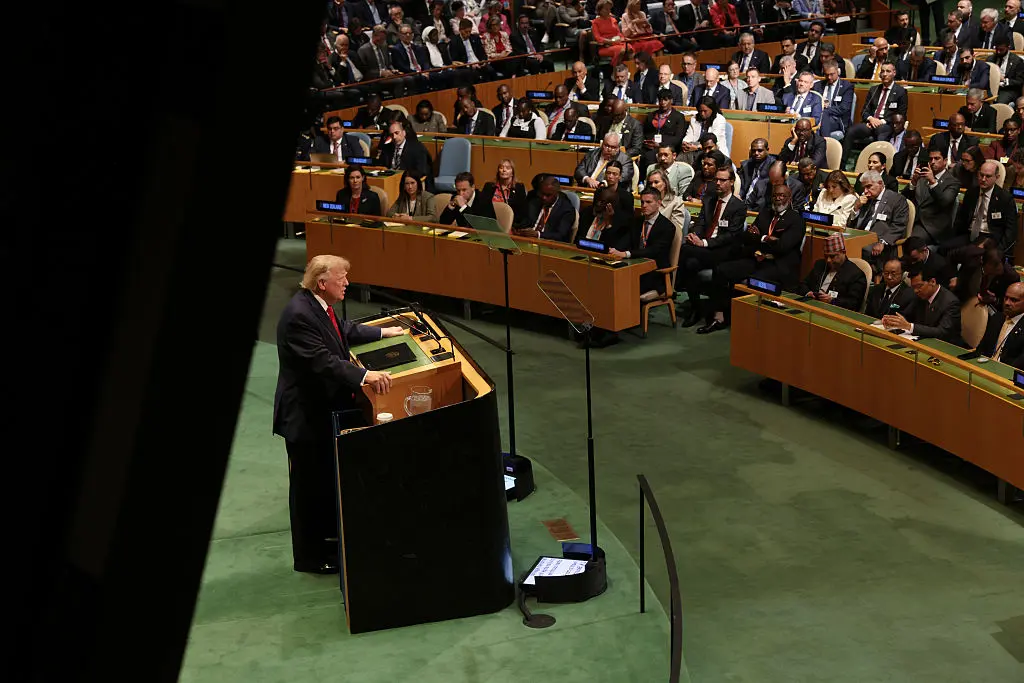 President Trump Declares Force the Path to Peace at UN Assembly
 China’s Clean Energy Exports Surge Amid Iran Conflict, Boosting Xi’s Leverage in U.S. Talks
 Carney Commits $100 Million to Palestinian Aid at
 Family Claims Neglect Led to Death of Costa Rican Detainee in ICE Custody
UK officials argue that a single global framework is essential to prevent regulatory arbitrage, ensure safety, and promote innovation without compromising ethical safeguards. They emphasize that divergent rules among nations could hinder cross-border AI development and create loopholes exploited by malicious actors. The proposal builds on the UK’s existing AI Safety Summit series and its role in hosting early international dialogues on AI risk management.
Despite the UK’s ambition, its efforts may face significant pushback from the United States, particularly under the renewed leadership of Donald Trump, who has previously expressed skepticism toward international tech agreements. Trump’s administration has favored a light-touch, innovation-first approach to AI regulation, warning that overly prescriptive rules could stifle American competitiveness. This philosophical divide threatens to stall consensus at the G20, where unanimity is often required for formal outcomes.
What Happens If No Agreement Is Reached?
UK diplomats are reportedly engaging in behind-the-scenes talks with US counterparts to find common ground, focusing on shared concerns about AI-generated disinformation and cybersecurity risks. Officials suggest that framing standards as voluntary guidelines rather than binding mandates could ease American objections. However, critics warn that without enforceable mechanisms, any agreement may lack real-world impact.
Failure to secure a unified approach could result in a patchwork of national AI regulations, increasing compliance costs for multinational companies and complicating global tech supply chains. It may also weaken collective responses to AI-driven threats such as deepfakes, autonomous weapons, and algorithmic bias. The UK has signaled it may proceed with forming a coalition of willing nations to advance interim standards, even without full G20 backing.
Frequently Asked Questions
What specific AI standards is the UK proposing at the G20? The UK is advocating for common benchmarks on AI safety testing, transparency in training data, and accountability for high-risk AI systems, though exact details are still being negotiated.
Why is the US likely to oppose the UK’s proposal? The Trump administration has consistently resisted international regulatory frameworks it views as infringing on national sovereignty and hindering domestic innovation, preferring sector-specific guidance over broad mandates.
Could the UK form an alternative alliance if the G20 fails to agree? Yes, UK officials have indicated they would work with like-minded countries to develop interim AI standards, potentially creating a influential bloc outside the G20 process.