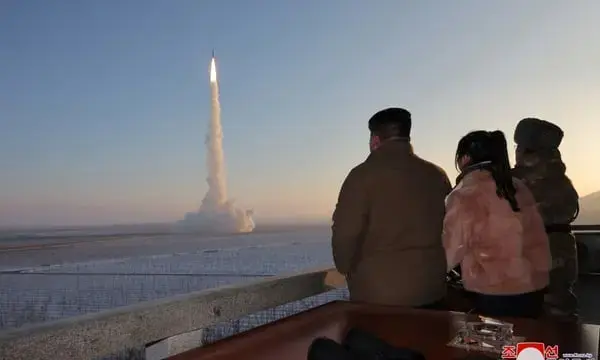
Recasting Nuclear Power as a Diplomatic Asset
Pyongyang announced on Tuesday that it will pursue a „responsible nuclear power” stance, despite ongoing United Nations sanctions. The declaration was made at a closed‑door meeting of senior officials in the capital, coinciding with renewed scrutiny of the regime’s missile program. Kim Jong Un’s leadership emphasized the need for international recognition of its nuclear capabilities as a deterrent, while rejecting what it calls selective enforcement of sanctions.
Latest news
 UN Report Accuses US and Iran of Serious Human Rights Violations
 Canada Eyes EU Associate Membership Under Prime Minister Mark Carney
 Fiji Declares National Emergency Over Rapid HIV Surge
 Israeli Forces Detain Palestinian Journalist in Ramallah Raid
The move comes as UN member states struggle to maintain a unified approach to sanctions that target North Korea’s weapons development. Analysts say the fragmented enforcement reflects divergent interests among China, Russia, and Western nations. Pyongyang appears to be leveraging this division to push a diplomatic narrative that frames its nuclear arsenal as a stabilizing force rather than a threat. The regime’s state media cited „peaceful coexistence” and „regional security” as reasons for its nuclear ambitions, a shift from earlier rhetoric that portrayed the weapons as purely defensive.
North Korean officials argue that a recognized nuclear status would grant the country leverage in future negotiations. They claim that responsible stewardship of nuclear technology can coexist with global non‑proliferation goals. In a televised address, a senior party member warned that continued sanctions could drive Pyongyang to further isolation, reducing opportunities for dialogue. The statement also suggested that a „responsible” nuclear posture would encourage other nations to engage in constructive talks, rather than punitive measures.
Will International Pressure Shift as North Korea Seeks Legitimacy?
Experts note that the language mirrors past attempts by the regime to rebrand its weapons program. By portraying its arsenal as a tool for peace, Pyongyang hopes to soften the image that fuels international condemnation. The timing aligns with a recent UN Security Council report that highlighted inconsistencies in sanction implementation, especially regarding maritime inspections and financial restrictions. This report has spurred calls for a more coordinated response, but consensus remains elusive.
The question now is whether the global community will respond to Pyongyang’s call for „responsible” nuclear status. Some diplomats argue that acknowledging any nuclear legitimacy could undermine the non‑proliferation regime. Others suggest that engagement, rather than isolation, might open channels for verification and confidence‑building measures. The United States and South Korea have reiterated their commitment to a denuclearized peninsula, warning that any perceived concession could embolden Pyongyang’s ambitions.
If the UN fails to present a unified front, North Korea may continue to exploit the gaps, using its nuclear narrative to extract concessions in trade and humanitarian aid. The regime’s strategy appears to be a calculated gamble: trade sanctions for diplomatic recognition. Observers caution that this could set a precedent for other states seeking nuclear legitimacy through similar tactics.
Frequently Asked Questions
What does „responsible nuclear power” mean for North Korea? It is a term used by Pyongyang to suggest that its nuclear arsenal can be managed safely and used only for deterrence, not aggression.
How are UN sanctions currently being enforced? Enforcement varies; some member states conduct rigorous inspections, while others apply looser controls, leading to uneven pressure on the regime.
Could this stance lead to a new diplomatic breakthrough? Possibly, if the international community chooses dialogue over isolation, but many fear it may legitimize nuclear proliferation.