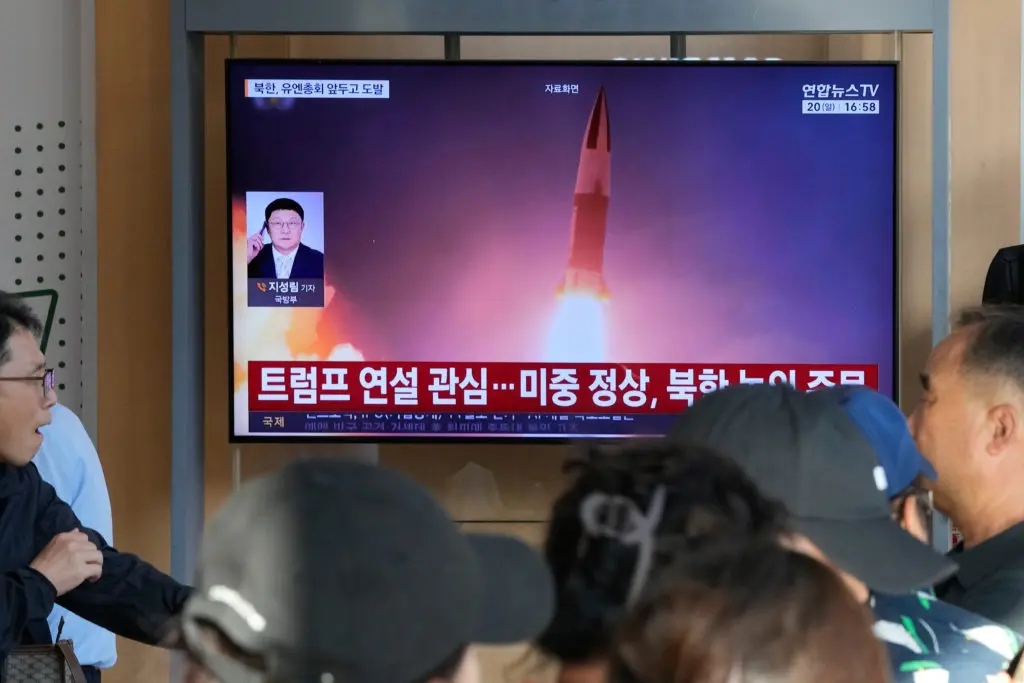
Escalating Military Posture: What North Korea Gains
On September 20, North Korea launched two short‑range ballistic missiles over the eastern coast, sending them into the sea. The test occurred near the Korean Peninsula and was witnessed by satellite imagery and local observers. The country’s military said the launch was a demonstration of its growing missile capabilities.
Latest news
 Trump & Xi to Meet Amidst Friction on Wars, Tech, Trade
 Trump's Triumphal Arch Plan Highlights Growing Political Isolation
 Trump to Create Health Funding Board with Power to Veto „Woke” Research
 Iran's Foreign Minister Heads to New York for UN General Assembly
The missiles, reportedly of the Hwasong‑12 type, were fired from a coastal launch site and traveled a distance of roughly 200 kilometers before falling into the water. Analysts say the test was designed to show that the regime can strike targets in the region and to test new guidance systems. The launch follows a series of recent demonstrations, including a rocket test last month and a nuclear‑capable missile test earlier this year.
Will the U. S. Counter With Force?
North Korea’s leadership has repeatedly used missile tests to signal strength to its adversaries. The regime claims the tests prove its deterrence against external threats, especially from the United States and its allies. By firing over the sea, the country avoids provoking a direct attack on neighboring states while still showcasing its arsenal. The government’s narrative stresses that these tests are defensive and a response to perceived aggression.
The United States has condemned the launch, calling it a provocation that undermines regional stability. Washington’s defense officials warned that the country’s missile program violates international arms‑control agreements. The U. S. has also increased its presence in the area, conducting joint exercises with South Korea and Japan. These actions aim to deter further North Korean provocations and reassure allies.
Consequences for the Region
The question on many analysts’ minds is whether the United States will respond militarily to these missile launches. Washington has stated it will not retaliate with force unless it is directly attacked. However, the U. S. has signaled that it will maintain a robust deterrent posture, including potential air strikes against North Korean missile sites. Diplomatic channels remain open, with the U. S. urging the regime to halt its missile program and engage in talks.
The international community has called for renewed negotiations under the Six‑Party Talks framework. Meanwhile, the United Nations Security Council has threatened further sanctions if North Korea continues its weapons program. The regime’s actions have heightened tensions in the region, prompting neighboring countries to review their defense strategies.
Frequently Asked Questions
The missile launch has increased pressure on the United States and its allies, prompting a reassessment of security arrangements in Northeast Asia. South Korea and Japan have intensified joint military drills, while the U. S. has reinforced its missile defense systems in the region. The tests also raise concerns about the spread of missile technology to other states or non‑state actors. International observers warn that continued provocations could lead to a dangerous arms race and destabilize the peninsula.
In the coming weeks, the U. S. and its partners will likely push for stricter sanctions and diplomatic engagement. The situation remains volatile, and any misstep could trigger a broader conflict. The world watches closely as North Korea continues to test its weapons, while the United States balances deterrence with the risk of escalation.