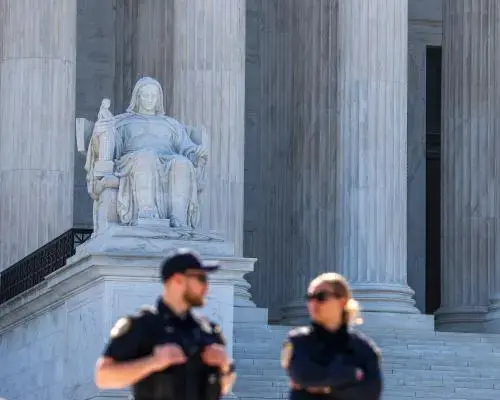
A Shift in Power Dynamics
The Supreme Court ruled 6-3 against Louisiana’s congressional map. This decision significantly alters a key part of the Voting Rights Act of 1965. The ruling impacts protections against racial discrimination in voting nationwide. The case centered on whether the map unfairly diluted Black voters’ power.
Latest news
 Swedish Voters Choose New Parliament as Left-Wing Coalition Projects to Win Majority
 Trump Announces End of US Tariff on Irish Whisky
 Frances Stonor Saunders, Author of CIA Cultural Espionage Exposé, Dies at 66
 Israel and Lebanon to Hold Security Talks in Rome This October
The court effectively dismantled a provision of the Voting Rights Act. This provision allowed courts to strike down maps deemed discriminatory. Louisiana argued its map complied with existing laws. Civil rights groups contended the map limited Black voters’ representation. The decision empowers state legislatures in redistricting processes.
This ruling marks a substantial change in civil rights law. Previously, the Voting Rights Act provided strong federal oversight. It prevented states with a history of discrimination from enacting unfair voting rules. Now, legal challenges will be more difficult to pursue. Opponents fear this will lead to gerrymandering and voter suppression.
Will Minority Representation Suffer?
The 1965 Voting Rights Act was a landmark achievement. It aimed to ensure equal access to the ballot box for all citizens. Over the years, the Supreme Court has gradually weakened the Act. Critics say these decisions erode vital protections for minority voters. This latest ruling is considered the most significant setback yet.
The court’s decision allows Louisiana to redraw its congressional map. The state must now create a map that provides fairer representation. However, the ruling makes it harder to prove discriminatory intent. This raises concerns about whether the new map will truly address the issue. Legal experts predict similar cases will arise in other states.
Civil rights organizations strongly condemned the ruling. They argue it will disproportionately harm Black voters. They believe the decision will make it more difficult to elect candidates of their choice. Some groups are calling for Congress to pass legislation restoring the Voting Rights Act.
Frequently Asked Questions
The long-term consequences of this decision remain unclear. It could lead to a decline in minority representation. It also may increase political polarization. The ruling underscores the ongoing debate over voting rights in the United States. Future elections could be significantly affected.
What was the core issue in the Louisiana case? The case focused on whether Louisiana’s congressional map unfairly limited the voting power of Black citizens. Civil rights groups argued the map diluted their representation, violating the Voting Rights Act.
How does this ruling impact the Voting Rights Act? The Supreme Court weakened a key section of the Act. This makes it more difficult to challenge discriminatory voting maps in court. It shifts power back to state legislatures regarding redistricting.