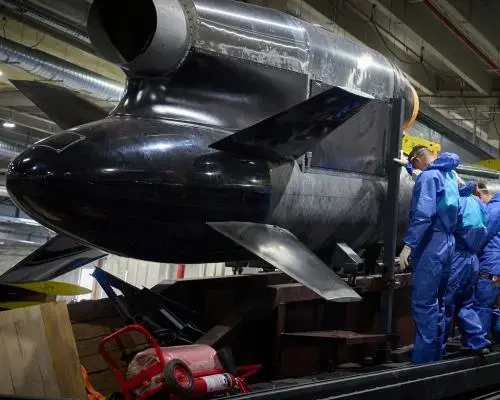
From Drones to Ballistic Missiles: How Ukraine Is Redesigning Its Arsenal
Kyiv could field domestically produced ballistic missiles capable of reaching Russian territory in as little as three to six months, according to former defence minister Mykhailo Fedorov. The claim was made during a recent briefing on Ukraine’s evolving war strategy. Fedorov warned that such weapons would dramatically change the conflict’s dynamics.
Latest news
 Swedish Voters Choose New Parliament as Left-Wing Coalition Projects to Win Majority
 Trump Announces End of US Tariff on Irish Whisky
 Frances Stonor Saunders, Author of CIA Cultural Espionage Exposé, Dies at 66
 Israel and Lebanon to Hold Security Talks in Rome This October
Until now, Ukraine has relied heavily on long‑range drones and cruise missiles supplied by Western allies to strike deep inside Russia. Those systems have proved effective but are vulnerable to Russian air defenses and electronic warfare. Ballistic missiles, by contrast, travel at higher speeds and follow a high‑arc trajectory, making them harder to intercept. Fedorov said Ukrainian engineers are accelerating development of a new missile family using locally sourced components and existing launch platforms.
The shift reflects a broader push to reduce dependence on foreign arms. Ukrainian factories that once produced artillery shells are being retooled to manufacture rocket motors and guidance modules. Collaboration with allied experts has fast‑tracked research, while domestic universities supply simulation software. Fedorov highlighted that the new missiles will likely be short‑range, targeting strategic sites within Russia’s western regions. He noted that early prototypes have already completed static tests, and flight trials could begin before the end of the year.
Can Ukraine Really Deploy Home‑Made Ballistic Missiles Within Half a Year?
Skeptics point to the technical challenges of building reliable propulsion, navigation, and warhead systems under wartime conditions. However, Fedorov argued that Ukraine’s recent successes with domestically assembled drones prove the country’s capacity to innovate quickly. He emphasized that the missiles will be launched from mobile launchers already in service, allowing rapid deployment once testing concludes. If the timeline holds, Kyiv could field a limited number of missiles by early 2025, delivering a new strategic threat to Moscow.
The emergence of Ukrainian ballistic capability could force Russia to divert resources to reinforce its western defenses, potentially easing pressure on Ukrainian front‑line units. It may also influence diplomatic calculations, as Moscow confronts a more unpredictable threat landscape. Yet, the actual impact will depend on production scale, reliability, and the ability to evade Russian missile‑defence systems. The coming months will reveal whether Ukraine can turn its ambitious plans into operational reality.
Frequently Asked Questions
What type of ballistic missiles is Ukraine developing? Ukraine is focusing on short‑range, solid‑fuel missiles designed to strike targets up to 500 kilometers away, using mobile launch platforms already in the army’s inventory.
How does this development affect the overall war effort? Introducing ballistic missiles could stretch Russian air‑defence resources, create new pressure points, and provide Kyiv with a more diverse strike capability.
Will Western partners continue to supply Ukraine with missiles? Western allies are expected to keep providing long‑range drones and cruise missiles, while also supporting Ukraine’s domestic missile program through training and technology sharing.