Why Are Low-Wage Workers Left Out?
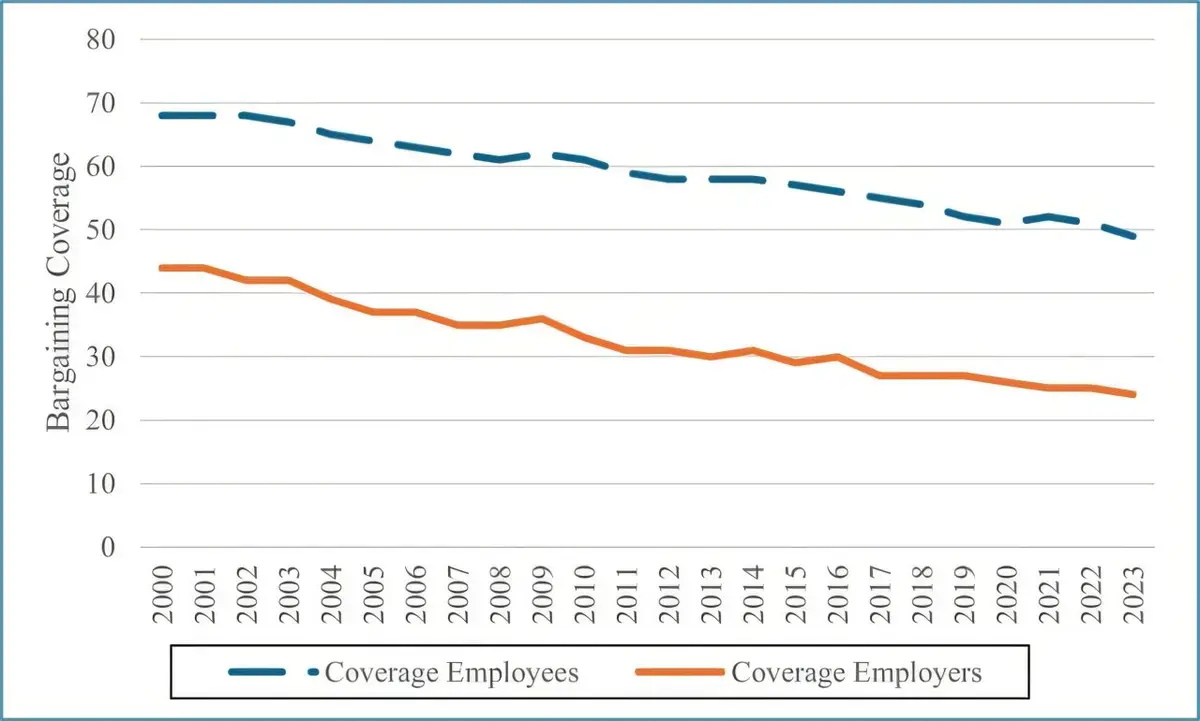
A new study reveals a stark disparity in Germany's labor market. Workers earning the lowest wages are the least likely to be covered by collective agreements. This trend means those most in need of protection often lack it.
Latest news
 Swedish Voters Choose New Parliament as Left-Wing Coalition Projects to Win Majority
 Trump Announces End of US Tariff on Irish Whisky
 Frances Stonor Saunders, Author of CIA Cultural Espionage Exposé, Dies at 66
 Israel and Lebanon to Hold Security Talks in Rome This October
The research highlights a significant gap in labor representation. Collective agreements typically ensure better pay and working conditions. However, these benefits are not reaching the most vulnerable employees.
The study points to several factors contributing to this imbalance. Industries with many low-wage jobs often have weaker union presence. Smaller companies, too, are less likely to engage in collective bargaining. This leaves many workers without a strong voice.
Does This Trend Undermine Worker Protections?
These findings suggest a systemic issue. The current system fails to adequately protect those at the bottom of the pay scale. Without collective agreements, these workers face greater insecurity. They also have fewer opportunities for wage increases.
Indeed, the trend significantly weakens overall worker protections. Collective agreements set minimum standards for wages, hours, and benefits. Their absence for low-wage workers can lead to exploitation. It also exacerbates income inequality across the country.
The implications are far-reaching. A lack of collective representation can depress wages in entire sectors. It also makes it harder for workers to advocate for their rights. This situation creates a two-tiered labor market.
The study underscores a critical challenge for policymakers. Addressing this disparity is crucial for a fair and equitable labor market. Strengthening collective bargaining for low-wage workers could improve living standards. It would also help to reduce economic inequality.
Frequently Asked Questions
What is a collective agreement? A collective agreement is a contract between employers and trade unions. It sets out terms and conditions of employment, including wages, hours, and benefits, for a group of workers.
Why are collective agreements important for workers? They provide workers with stronger protections and better working conditions. These agreements often lead to higher wages, improved benefits, and more stable employment compared to individual contracts.
Which types of workers are most affected by this disparity? The study indicates that workers in low-wage sectors and those employed by smaller companies are most affected. These groups often have limited union representation and thus less access to collective bargaining.