
Shifting Oversight and Evolving Military Demands
The debate over how the United States Congress will oversee the defense sector following the 2027 shift in power dominates current discussions within the military industry. Kristina Moore, a partner at the Washington law firm Womble Bond Dickinson, warns newer defense firms to brace for potential anti-corruption probes from lawmakers. In a recent interview, Moore—who previously worked as a congressional investigator—emphasized the importance of assessing ties to the Trump administration before the new Democrat-led Congress convenes next year. She argues that companies must carefully analyze their board compositions and fully understand what being ready to respondentails within the boundaries of legislative oversight.
Latest news
 Will Atiku Abubakar remain on Nigeria's presidential ballot after court ruling?
 Turkey Halts Turkmen Gas Imports Through Iran
 European Markets Retreat Amid Global Tech Selloff
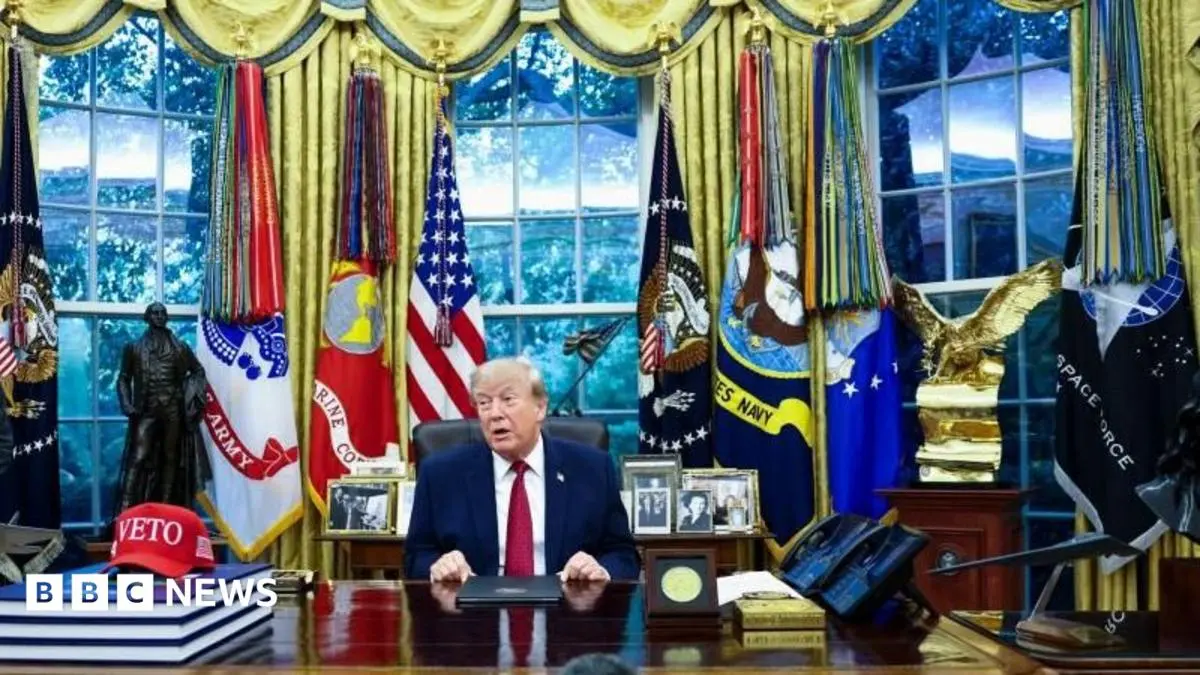 Trump Signs Order to Lock In Oval Office Redesign
An unexpected aspect that many corporate attorneys overlook is how Congress treats privileged communications. The legislative stance dictates that common-law privileges, such as attorney-client confidentiality or work-product protection, are recognized solely at the discretion of members of Congress. This reality often shocks legal advisors who automatically assume that discussions with outside counsel remain secure. Moore explains that receiving a congressional inquiry typically triggers a strict two-week deadline, increasing pressure and risking compulsory legal action if missed. Hot-button topics for upcoming parliamentary investigations include Iran, Venezuela—including boat strikes targeting drug imports—and artificial intelligence policies. Moore encourages firms to evaluate their risk exposure immediately and organize their operations accordingly.
Elsewhere in industry analysis, Shaun McDougall, a senior defense analyst at Forecast International, predicts a surge in oversight regarding foreign military sales in 2027. The Trump administration actively promoted sales to nations like Saudi Arabia and Turkey, potentially sparking pushback from Democrats in the incoming Congress. These debates could directly impact American companies, ranging from F-35 systems down to munitions and smaller components. McDougall notes that demand for military equipment will likely remain steady, driven by conflicts in Iran and ongoing support for Ukraine. Constant demand persists for counter-mission defense, anti-drone capabilities, and low-cost interceptors, although the exact nature of unfolding conflicts will shape short-term requirements.
Ben Kesling, head of government relations at Chariot Defense, maintains that bipartisan cooperation in Congress should ultimately prevail. Modernization and force equipment enjoy backing from both sides of the aisle, ensuring the next Congress will continue advancing new defense technology. Regardless of who chairs specific committees in January, operational units constantly require weaponry, communications, sensors, and power. Budget debates will undoubtedly prove intense, yet achieving affordable and sustainable capabilities for American troops already enjoys widespread support.
Pacific Exercises and Technological Innovations
In Hawaii, the Defense Information Systems Agency (DISA) successfully concluded the Olympus Fires exercise alongside foreign partners and Pacific military components. The primary objective involved all participants utilizing a shared digital environment to exchange vital data for locating and neutralizing targets. Colonel Michael Hlad, commander of the DISA regional command in the Pacific, explained that gathering teams within a common environment proved to be a resounding success. For instance, a Marine Corps artillery liaison team successfully located a target that a Canadian sniper subsequently eliminated. The ability to acquire, share, and engage targets within a single environment marks a first for DISA. Although comprehensive analysis remains ongoing, initial conclusions highlight a clear understanding of coalition capabilities, with expansion plans already underway to evaluate logistics and maneuverability.
During this same exercise, GDIT tested its Vion Edge platform. Jason Myers, vice president for defense agencies at GDIT, described the product as a tactical kit delivering essential mission partner environment services during network degradation. For example, when one military force experienced a network outage, operators transferred their logs to the GDIT platform and utilized artificial intelligence to diagnose and resolve the issue, fully restoring operations within hours.
In other sector news, Vice Admiral Jonathan Rucker is slated to become the program acquisition director for Navy marine programs. Shield AI unveiled its X-BAT prototype and announced the acquisition of radar manufacturer Echodyne for $5.3 billion. Additionally, Oshkosh Defense, renowned for manufacturing military trucks, partnered with Grid Aero to develop aerial drones.