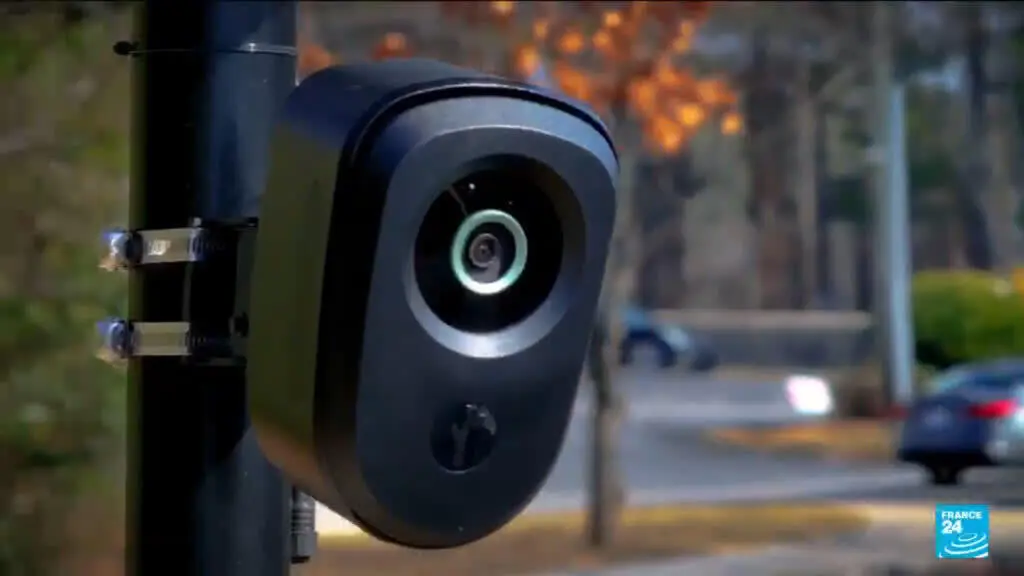
How Flock's Technology Expands Police Surveillance Capabilities
Flock Safety, a private technology company, has deployed thousands of AI-equipped license plate readers in neighborhoods and cities nationwide, creating a vast surveillance network that tracks vehicle movements in real time. The system, marketed as a tool to reduce crime, has sparked growing alarm among civil liberties advocates and residents who fear unchecked monitoring and potential misuse of collected data.
Latest news
 No Military Fix for US‑Iran Tension, Says Tehran’s Foreign Minister
 Stock Futures Hold Steady as Investors Await Fed Minutes and Higher Yields
 Scientists Identify Brain Region That May Drive High Blood Pressure and Offer New Treatment Pathway
 Macron's Busy Schedule Threatens His Attendance at COP31 and Undermines Paris Agreement Support
The cameras, installed on poles and buildings, automatically capture license plate numbers, vehicle types, and timestamps, then use artificial intelligence to flag vehicles associated with amber alerts, stolen cars, or wanted individuals. Flock claims its technology has helped solve crimes and recover vehicles, citing partnerships with over 1,200 law enforcement agencies. However, critics argue the system operates with minimal oversight, allowing police to access historical location data without warrants in many jurisdictions, raising Fourth Amendment concerns.
What Safeguards Exist Against Misuse of Collected Data?
Flock's network integrates with police databases to provide real-time alerts when a flagged vehicle passes a camera, enabling rapid response to incidents. The company stores data for up to 30 days by default, though some agencies extend retention periods. Investigative reports have revealed instances where Flock data was used to track individuals attending protests or visiting sensitive locations, such as abortion clinics, without their knowledge. In one case, a Florida man was wrongfully detained after Flock misread his license plate, highlighting risks of algorithmic error. Privacy experts warn that the aggregation of movement patterns could enable predictive policing tactics that disproportionately target marginalized communities.
Flock states it prohibits use of its data for immigration enforcement or political surveillance and requires agencies to sign usage agreements. Yet enforcement relies on self-reporting, and independent audits are rare. Several cities, including Portland and Oakland, have banned or restricted Flock installations over transparency concerns. Legislation proposing stricter limits on automated license plate readers is under consideration in multiple states, but federal regulation remains absent. As adoption grows, debates intensify over balancing public safety tools with constitutional protections against unreasonable search and seizure.
How does Flock's AI determine if a vehicle is suspicious? The system compares license plates against hot lists provided by law enforcement, including stolen vehicles, amber alerts, and vehicles linked to active investigations, using optical character recognition and pattern matching algorithms.
Frequently Asked Questions
Can individuals request deletion of their vehicle data from Flock's network? Flock does not offer a direct opt-out mechanism for individuals; data retention and deletion policies are controlled by the law enforcement agencies that access the system, not by the company or the public.
Are there proven cases where Flock surveillance prevented violent crime? Flock cites internal metrics showing contributions to vehicle recoveries and suspect identifications, but independent verification of its impact on reducing violent crime rates remains limited and contested by researchers.