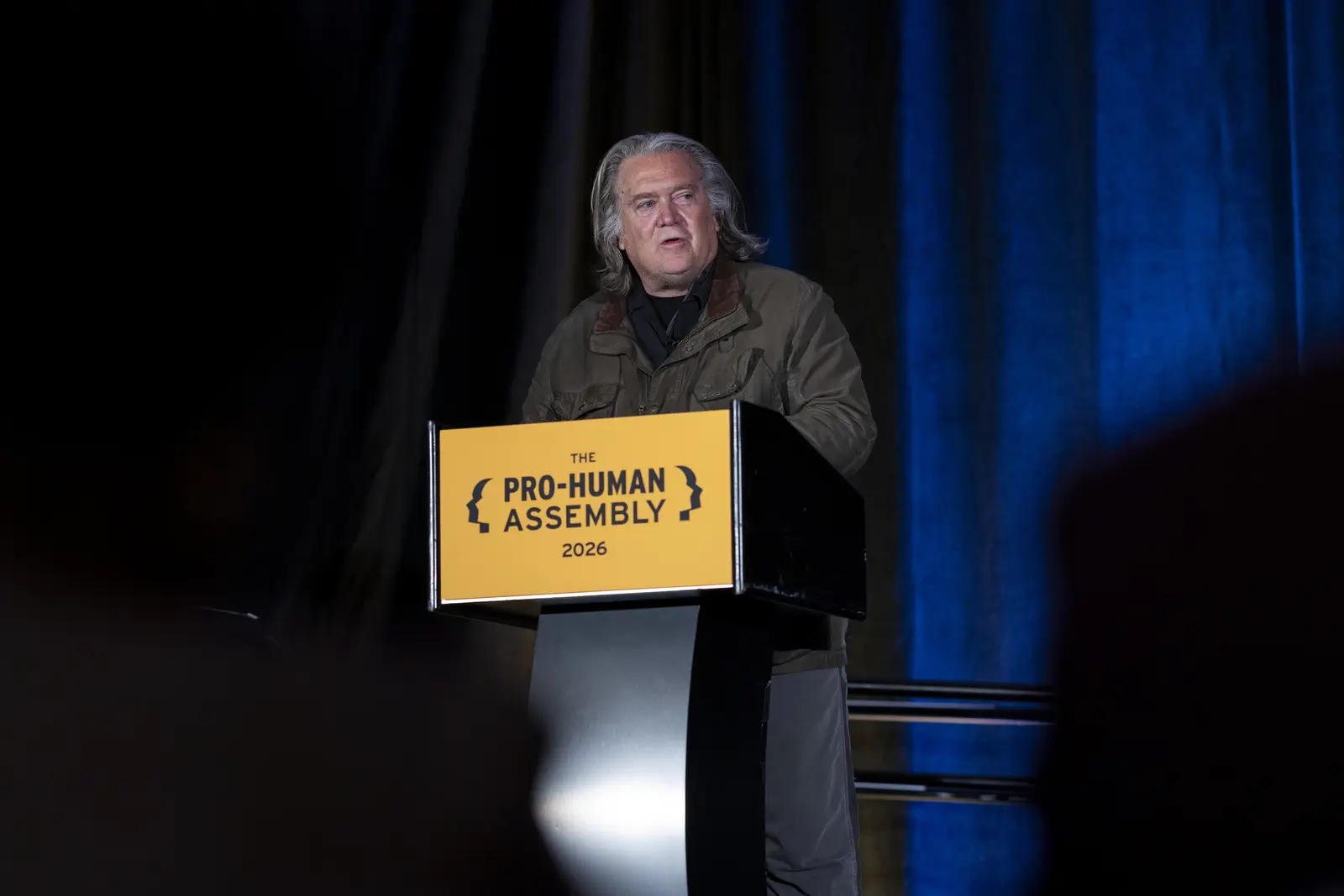
Why Bannon Rejects Trump's AI Laissez-Faire Approach
Former White House strategist Steve Bannon has publicly supported Senator Bernie Sanders' approach to artificial intelligence regulation, diverging sharply from former President Donald Trump's hands-off stance. Speaking on NPR's Morning Edition on September 16, 2026, Bannon argued that unchecked AI development poses systemic risks to democratic institutions and labor markets, requiring aggressive federal oversight. His comments came amid growing bipartisan concern over AI's rapid advancement and its potential to disrupt elections, displace workers, and concentrate technological power in private hands.
Latest news
 Israel Has Lost the American Public, and Politicians Are Next
 Putin Links High Voter Turnout to Support for Ukraine War
 US Federal Reserve Hikes Rates for First Time in Three Years
 UK Trade Unions Reject Plan to Boycott and Sanction Israel
Bannon's position reflects a strategic shift in his political alignment, emphasizing populist concerns about economic inequality and corporate influence. He criticized Trump's deregulatory framework as overly deferential to Silicon Valley interests, warning that it would allow tech giants to shape AI governance without public accountability. Instead, Bannon endorsed Sanders' call for a federal AI oversight agency with authority to audit algorithms, enforce transparency, and break up monopolies in AI infrastructure. He stressed that AI's societal impact demands intervention similar to historical antitrust actions against railroads and oil monopolies.
Can Populist Unity on AI Counter Technocratic Control?
Bannon contended that Trump's vision of minimal government involvement in AI ignores the technology's capacity to amplify disinformation and manipulate public opinion at scale. He pointed to AI-generated deepfakes already used in foreign election interference as evidence that voluntary industry standards are insufficient. According to Bannon, only binding regulations can prevent AI from becoming a tool for authoritarian control, whether by foreign actors or domestic elites. He dismissed claims that regulation would stifle innovation, arguing that clear rules would actually foster long-term trust and stability in AI markets.
Bannon suggested that his alignment with Sanders reveals a emerging populist consensus across the ideological spectrum on the need to democratize AI development. He noted that both left and right critics share fears about unaccountable algorithms making decisions affecting healthcare, hiring, and criminal justice. This convergence, he argued, could form a political coalition capable of challenging the influence of major tech firms in shaping AI policy. However, he acknowledged that translating this alignment into legislation remains difficult due to partisan divisions on other issues and lobbying power of AI-dependent industries.
Frequently Asked Questions
What specific policies does Bannon support for AI regulation? Bannon backs creating a federal AI oversight agency with power to audit high-risk systems, mandate algorithmic transparency, and enforce antitrust actions against companies dominating AI chips, cloud computing, and foundation models. He also supports banning AI use in autonomous weapons without human oversight.
Does Bannon believe AI regulation will hurt American competitiveness? No, Bannon argues that responsible regulation will enhance long-term competitiveness by preventing market abuses and public backlash that could trigger stricter restrictions later. He compares it to financial regulations after the 2008 crisis, which he says ultimately strengthened the system.