How Will Self-Policing Actually Work in Practice
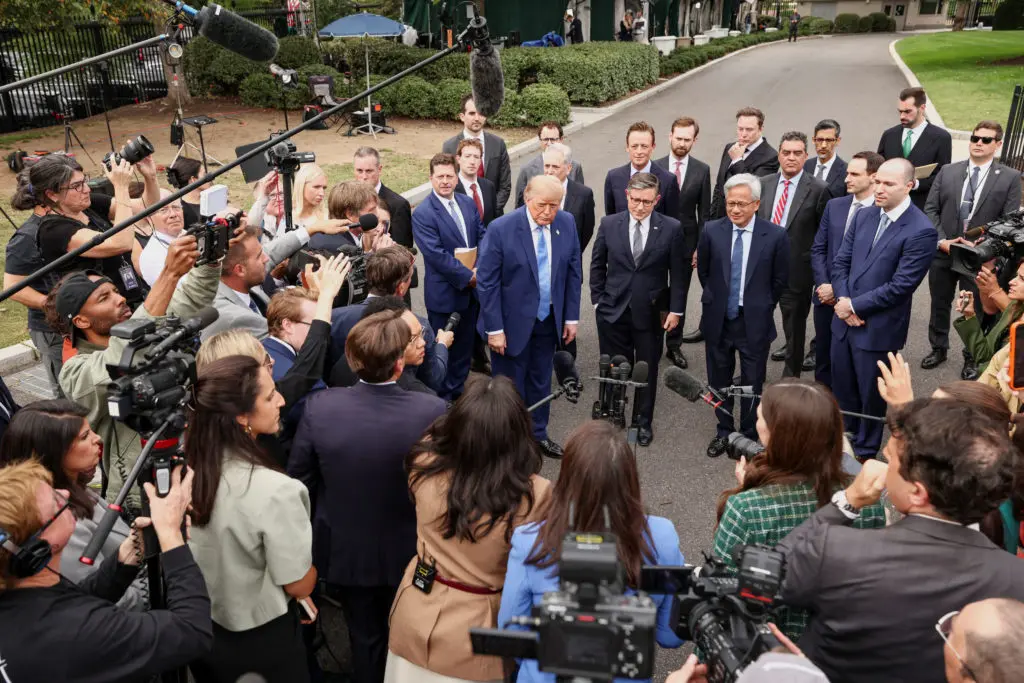
President Donald Trump announced on Tuesday that leading artificial intelligence companies have signed a voluntary agreement to implement self-policing mechanisms for their technologies. The accord was unveiled during a White House gathering attended by executives from major AI firms and administration officials. Trump framed the initiative as a step toward responsible innovation without heavy-handed government intervention.
Latest news
 G20 Trade Ministers Gather in Wisconsin Amid Tariff Tension
 Senate Democrats Unite to Push for West Bank Violence Report
 Sandino's Rebellion Against U.S. Occupation Begins in Nicaragua
 Diesel Surpasses Gasoline as Europe's Most Expensive Fuel
The agreement commits participating companies to develop internal oversight systems aimed at preventing misuse of AI, including risks related to deepfakes, automated disinformation, and biased algorithmic outcomes. Administration officials said the framework would rely on transparency reports, third-party audits, and ethical review boards established within each corporation. Trump emphasized that the approach balances innovation with accountability, arguing that industry-led solutions can adapt faster than bureaucratic regulations.
Details of the self-policing model remain vague, with companies pledging to create internal guidelines for high-risk AI applications such as facial recognition and generative media tools. Participants agreed to share anonymized incident data through a yet-to-be-formed industry consortium, though no enforcement penalties were outlined for non-compliance. Critics note that past voluntary tech agreements have often lacked teeth, raising questions about whether this effort will yield meaningful safeguards or merely serve as public relations positioning.
Can Voluntary Measures Prevent AI Harm Without Legal Backstops
Experts warn that without legal consequences, companies may prioritize profit over precaution, especially in competitive markets where speed to market is crucial. Some lawmakers have called for baseline federal standards to complement any industry efforts, citing concerns over national security and civil liberties. Administration officials countered that the agreement includes commitments to ongoing dialogue with regulators and periodic public assessments of progress, though they did not specify independent verification methods.
The initiative reflects growing pressure on governments worldwide to address AI risks while avoiding innovation-stifling rules. Similar self-regulatory pushes have emerged in the European Union and United Kingdom, though those regions are simultaneously advancing binding legislation like the AI Act. For now, the Trump administration presents this accord as a pilot model that could influence future policy if demonstrated effective in reducing harmful AI deployments.
Frequently Asked Questions
Which companies signed the AI self-policing agreement? The White House did not release a full list of signatories, but administration officials confirmed participation from major players in generative AI, cloud computing, and AI chip development, including firms involved in large language models and enterprise AI solutions.
What specific harms is the agreement meant to prevent? The accord focuses on curbing misuse of AI in creating deepfakes, spreading automated disinformation, and deploying biased algorithms that could discriminate in hiring, lending, or law enforcement applications.
Will there be penalties for companies that violate the agreement? No financial or legal penalties were announced; compliance relies on voluntary adherence, public reporting, and industry peer pressure, with no independent enforcement mechanism detailed by the administration.