The Film’s Blend of Fact and Farce
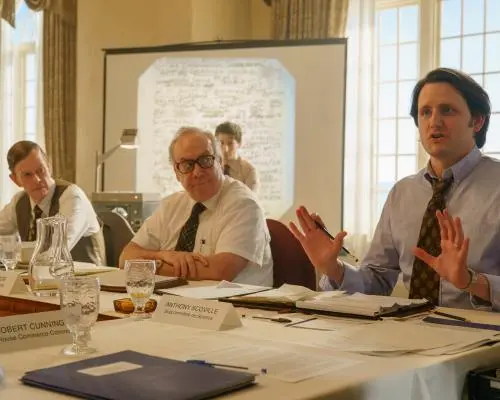
In late October 1980, just days before Ronald Reagan’s inauguration, the U. S. Congress gathered twenty specialists—from climatologists to economists—at a seaside resort in Florida. Their charge: assess the looming danger of fossil‑fuel‑driven warming and draft a concise statement to guide legislative action. The resulting report, though largely ignored at the time, now fuels a sharply witty film that blends history with satire.
Latest news
 UAE Shared Flight Details with Israel After FlyDubai Incident
 Taiwan Says US Policy Remains Unchanged After Trump-Xi Meeting
 Plague Threat Looms in Siberia After Lab Worker’s Death
 Lula and Bolsonaro Cast Votes Amid Brazil’s Polarised Election
The meeting unfolded against a backdrop of oil crises, rising global temperatures, and a political climate eager for quick fixes. Delegates spent long evenings debating carbon’s impact, debating mitigation strategies, and wrestling with the political feasibility of regulation. Their final document urged immediate investment in renewable research, stricter emissions standards, and international cooperation—recommendations that would echo in policy debates for decades. The film captures this tension, using sharp dialogue and period details to illustrate how scientific urgency collided with partisan inertia.
Director Alex Monroe stitches archival footage with dramatized scenes, letting actors Paul Rudd, Paul Giamatti, and Tatiana Maslany embody the scientists, policymakers, and lobbyists present at the 1980 summit. Rudd’s character, a charismatic atmospheric physicist, delivers a memorable line: „We can’t wait for the next election to fix the planet.” Giamatti portrays a skeptical senator who questions the feasibility of any regulation, while Maslany plays a young researcher pushing for bold, data‑driven solutions. The screenplay balances earnest scientific exposition with dark humor, highlighting how bureaucratic red tape often stifles progress. Critics praise the ensemble’s chemistry, noting that each performance grounds the film’s more absurd moments in genuine human concern.
Could 1980’s Recommendations Have Changed Today’s Climate Crisis?
The movie also underscores the era’s limited data. Scientists relied on rudimentary satellite readings and sparse temperature records, yet they warned of a „tipping point” that could trigger irreversible climate shifts. By juxtaposing these early warnings with today’s climate realities—rising sea levels, record‑breaking heatwaves, and intensified storms—the film forces viewers to confront the missed opportunities of the past.
The film asks a provocative question: if Congress had acted on the 1980 statement, would the current climate emergency look different? Experts consulted for the production suggest that early adoption of renewable subsidies and stricter emissions caps could have slowed global warming by up to 0.5 °C. However, political will was lacking; the Reagan administration prioritized deregulation and fossil‑fuel expansion, sidelining the scientists’ pleas. The movie’s narrative implies that institutional inertia, rather than scientific uncertainty, was the primary barrier to action.
By dramatizing this pivotal moment, the film invites audiences to reconsider how policy decisions shape environmental outcomes. It also serves as a cautionary tale for today’s lawmakers, who face similar crossroads as they debate carbon pricing, clean‑energy infrastructure, and international climate accords.
The dramedy’s release arrives at a time when climate legislation is again at the forefront of national debate. Its blend of humor and hard‑won lessons may inspire a new generation of policymakers to heed scientific counsel before another critical juncture passes.
Frequently Asked Questions
What real event inspired the movie? The film is based on a genuine 1980 congressional hearing where twenty experts convened in Florida to draft a climate‑action statement, a meeting largely forgotten in history.
How accurate is the scientific content? While the dialogue is dramatized, the core scientific warnings—rising greenhouse gases, projected temperature increases, and the need for renewable investment—reflect the actual findings presented in the 1980 report.
Will the movie influence current climate policy? It’s too early to measure impact, but the film’s vivid portrayal of missed opportunities could pressure legislators to prioritize climate action, especially as public awareness grows.