How Their Theories Shape Monetary Policy
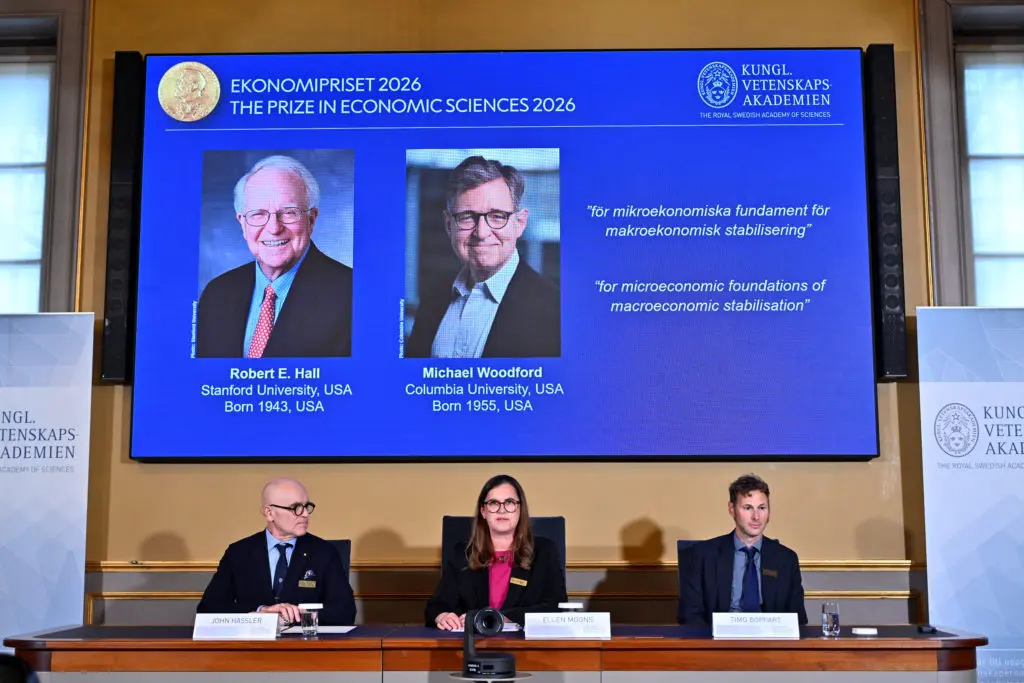
On Monday, the Nobel Prize in Economic Sciences was awarded to American economists Robert E. Hall and Michael Woodford. The award recognized their pioneering research on how economies respond to unexpected events, such as financial crises and policy changes. The announcement came from the Royal Swedish Academy of Sciences in Stockholm, where the Nobel Committee highlighted the practical relevance of their theories for modern policy design.
Latest news
 Economic Frustration Drives Washington to Step Up Market Intervention Post‑Midterms
 Congress Can Do More to Address Kushner’s Conflicts of Interest
 Nobel Prize-Winning Economists Hall and Woodford Recognized for Central Bank Research
 Cyprus Nears Schengen Membership Despite Political Hurdles
Hall and Woodford’s research focused on the mechanics of economic adjustment. They developed models that explain how markets and institutions interact when shocks occur, and how monetary and fiscal policies can influence the speed and stability of recovery. Their work has become a cornerstone for central banks and governments worldwide, providing a framework for assessing the impact of policy decisions on inflation, growth, and employment.
Why the Nobel Committee Praised Their Work
The laureates’ models emphasize the role of expectations and the transmission of policy signals through financial markets. Hall’s research on the „natural rate of unemployment” and Woodford’s analysis of the „Taylor rule” have guided central banks in setting interest rates. By quantifying the relationship between policy changes and economic outcomes, their theories help policymakers balance inflation control with growth objectives. Economists and analysts have cited their work in debates over stimulus measures and interest‑rate adjustments in the wake of global economic disruptions.
The committee noted that Hall and Woodford’s contributions bridged the gap between theoretical economics and real‑world policy. Their models provide tools for forecasting and stress testing, allowing institutions to anticipate the effects of shocks before they fully materialize. The Nobel Prize underscores the importance of rigorous economic analysis in shaping resilient economic systems, especially in an era of rapid technological change and geopolitical uncertainty.
What This Means for Future Research
The award is likely to spur further studies on economic resilience. Researchers may expand Hall and Woodford’s frameworks to incorporate climate change risks, digital currencies, and supply‑chain vulnerabilities. Policymakers, inspired by the laureates’ insights, may adopt more dynamic policy rules that adjust automatically to evolving economic conditions. The recognition also highlights the value of interdisciplinary collaboration, as the models integrate insights from finance, behavioral economics, and macro policy.
Q1: What specific models did Hall and Woodford develop that earned them the Nobel Prize? A1: Hall is known for his work on the natural rate of unemployment, while Woodford advanced the Taylor rule, a guideline for setting interest rates based on inflation and output gaps.
Frequently Asked Questions
Q2: How have their theories influenced central bank policy? A2: Their models provide a quantitative basis for adjusting monetary policy, helping central banks predict the impact of rate changes on inflation and employment.
Q3: Will their research affect fiscal policy decisions? A3: Yes, the frameworks help assess how fiscal stimuli interact with monetary policy, guiding governments in designing balanced economic interventions.