
How Their Research Changed Crisis Response
American economists Robert E. Hall and Michael Woodford have been awarded the Nobel Prize in Economics for their groundbreaking work on how central banks and governments can more effectively respond to economic shocks. The announcement was made on October 12, 2026, by the Royal Swedish Academy of Sciences in Stockholm. Their research has reshaped modern monetary policy frameworks, particularly in understanding the transmission mechanisms of fiscal and monetary interventions during crises.
Latest news
 Economic Frustration Drives Washington to Step Up Market Intervention Post‑Midterms
 Congress Can Do More to Address Kushner’s Conflicts of Interest
 Cyprus Nears Schengen Membership Despite Political Hurdles
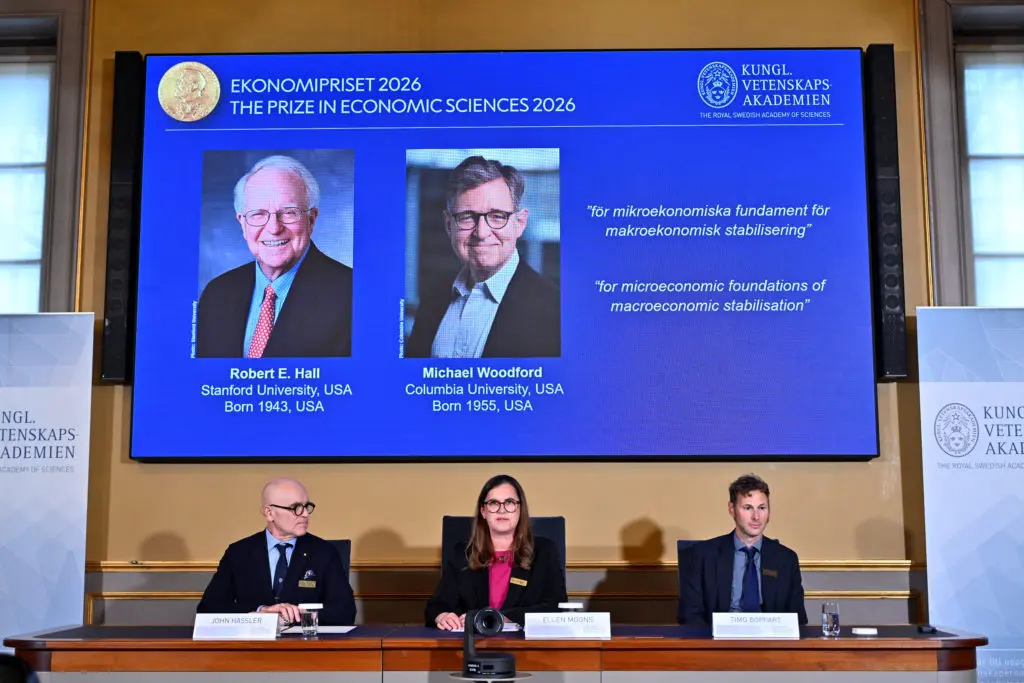 American economists Robert E. Hall and Michael Woodford receive Nobel Prize for work on economic shocks
Hall, a senior fellow at the Hoover Institution and professor emeritus at Stanford University, has long studied the dynamics of unemployment and labor markets. Woodford, formerly of Princeton University and now at Columbia University, is renowned for his contributions to interest rate theory and the new Keynesian model. Together, their insights have provided policymakers with tools to stabilize economies during downturns, emphasizing the importance of credible forward guidance and timely intervention.
What Lessons Can Be Drawn for Future Shocks?
Their collaborative and individual work has shown that central banks can mitigate recessions not only through interest rate adjustments but also by managing public expectations about future policy. Hall’s empirical analyses of labor market fluctuations complemented Woodford’s theoretical models on optimal monetary policy under uncertainty. During the 2008 financial crisis and the pandemic-induced recession of 2020, many central banks applied principles derived from their research, such as quantitative easing and state-contingent interest rate paths. Their work underscored that credibility and communication are as vital as the policy tools themselves.
Looking ahead, their findings suggest that policymakers must balance flexibility with consistency when facing unforeseen disruptions like climate-related supply chains or geopolitical tensions. The economists advocate for adaptive frameworks that allow central banks to act decisively while anchoring inflation expectations. Woodford has warned against overreliance on rules-based approaches without room for judgment, while Hall stresses the need for real-time data to avoid policy lag. Their combined legacy continues to influence how institutions like the Federal Reserve, the European Central Bank, and the Bank of England design their strategies.
What specific contributions led to their Nobel Prize? The prize recognized their research on how central banks and governments can better handle economic shocks through improved monetary and fiscal policy coordination, particularly focusing on expectation management and crisis stabilization.
Frequently Asked Questions
How has their work influenced real-world policy? Their theories informed policy responses during the 2008 financial crisis and the 2020 pandemic, guiding measures like quantitative easing and forward interest rate guidance to support economic recovery.
Are Hall and Woodford known for collaborating directly? While they have not frequently co-authored papers, their complementary research—Hall’s empirical focus on labor markets and Woodford’s theoretical work on monetary policy—has been jointly influential in shaping modern macroeconomic thought.