
Political Shifts and Market Reactions
US midterm election results triggered a sharp correction in global financial markets. Asian shares fell, and the US dollar weakened. Investors reacted to the prospect of stricter AI regulation and political gridlock. In the early European morning, the Associated Press reported that Democrats had won the Senate and were on track to take the House. This marked a major defeat for President Donald Trump and the Republican Party, which had controlled both chambers during the first two years of his second term.
Latest news
 2026 Midterms: Democrats Seize Senate Control, Reshaping U.S. Politics
 Iowa Democrat Christina Bohannan Secures House Seat After Third Attempt
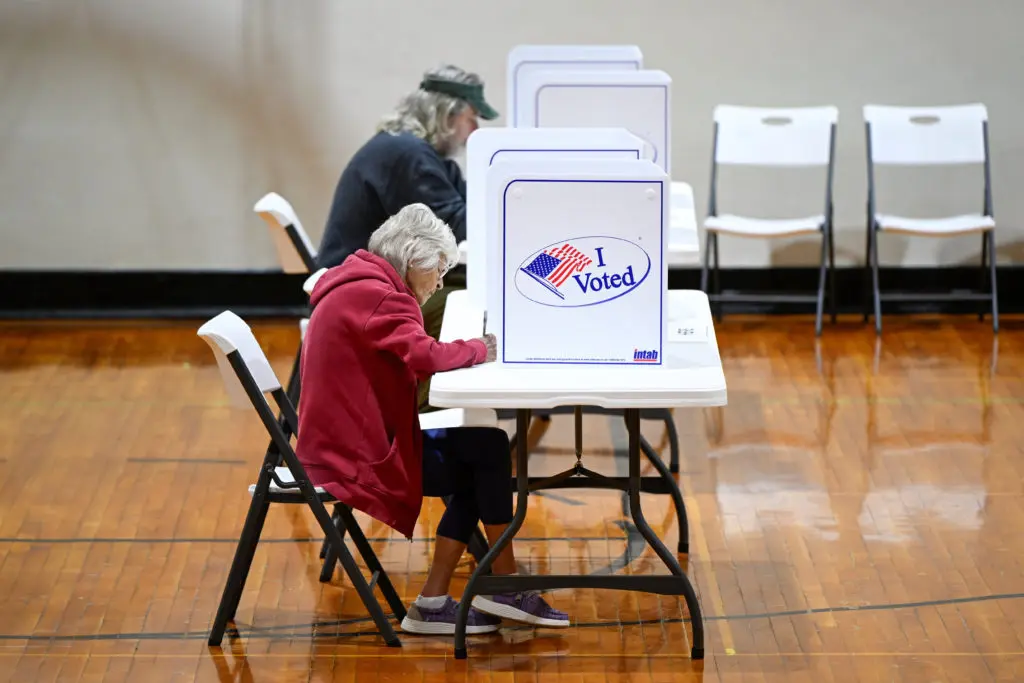 Democrat Rob Sand Wins Iowa Governor Race, Ending Two Decades of GOP Rule
 Gina Hinojosa Wins Texas Governor’s Race, Ending Republican Stronghold
Economic Fears and Campaign Dynamics
Voter concerns over the cost of living, including high fuel prices, were a key driver of the Democratic advance. Opposition to data centers also played a role in specific campaigns, such as the Ohio Senate race, where Republican Jon Husted defeated Democrat Sherrod Brown. This shift in congressional control could have significant consequences for the tech boom. Many Wall Street investors fear that a full Democratic victory could lead to increased regulation and restrictions on AI development.
Broad Implications for Sensitive Sectors
Beyond the future of AI data centers, Tuesday's results have broad implications for market-sensitive areas. These include the US fiscal outlook, defense spending, and regulation of the healthcare, banking, and cryptocurrency sectors. However, a divided federal government might not deliver the changes voters expect. Although a Democratic victory could hit Trump's agenda hard, the President stated he would become Mr. Vetoto block Democratic legislation. He added that deals could still be reached. Analyst Chris Weston from Pepperstone warned that this scenario means few things will get done in Washington. He highlighted that Democratic control would increase legislative gridlock, fiscal cliff games, and debt ceiling disputes. Yet, the President retains significant executive authority, making sectoral impacts complex. A narrow Blue Wave might already be priced in, while a landslide victory could force markets to reassess Trump's remaining agenda and the political trajectory toward 2028.
Currency and Bond Market Movements
This uncertainty weighed on equity markets and the US dollar, which weakened against major currencies. At 06:00 CET, European index futures fell between 0.3% and 0.5%. Euro STOXX 50 futures dropped 0.7%. The euro traded at 1.1249 dollars, and the pound rose 0.4% to 1.3460 dollars. The dollar fell to 157.63 Japanese yen. Bond yields eased slightly. The 10-year German Bund yield was 3.35% in early European hours, and the 10-year French OAT yield was 4.93%. The 10-year US Treasury yield reversed its earlier drop, rising to about 4.945% at 06:00 CET.
Asian Markets and Tech Sector Pressure
Asian shares fell alongside the US dollar on Wednesday. Tokyo dropped 2.85%, while the yen strengthened against the dollar, hurting exporters. Losses were seen in Shanghai, Sydney, Seoul, Singapore, and Taipei, while Hong Kong posted a slight gain. Tech companies faced pressure as investors worried about the AI investment boom and potential returns. As results spread on Wednesday, Japan's Nikkei 225 index fell 2.85% at 06:00 CET. Earlier, SoftBank Group shares, an OpenAI investor, dropped 8%. South Korea's Kospi index fell 1.17%. In Hong Kong, the Hang Seng index rose 0.38%, while the Shanghai Composite fell 0.23%. Australia's S&P/ASX 200 index dropped 0.8% after the central bank raised rates on Tuesday. Taiwan's Taiex index fell 2.3%.
US Markets and Commodity Prices
On Tuesday, the S&P 500 index rose 0.4%, though most constituent stocks fell. The Dow Jones Industrial Average dropped 197 points, or 0.4%, while the Nasdaq index rose 0.8%. Oil prices also declined. At the start of Wednesday, Brent crude, the international benchmark, traded below 104 dollars per barrel. US benchmark crude oil cost about 96 dollars per barrel. Gold traded at 3,958.50 dollars per ounce, up nearly 0.5%.