
What Went Wrong in the Heartland
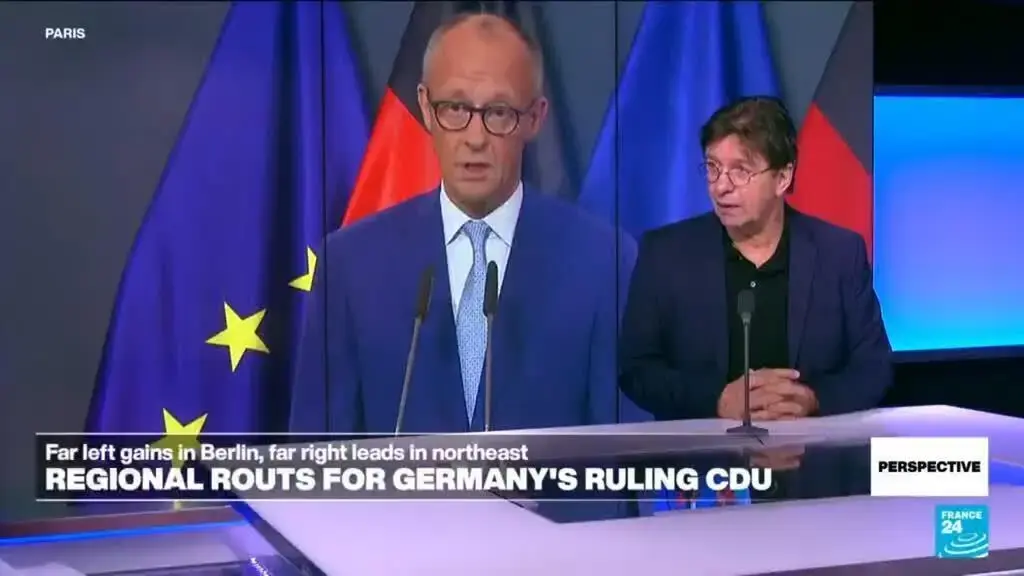
Friedrich Merz, the leader of Germany's Christian Democratic Union, convened a meeting with senior party figures in Berlin on Monday to address growing concerns following two consecutive regional election defeats. The gathering aimed to reassess strategy and reinforce internal unity after disappointing results in key states.
Latest news
 Professor Warns German Far‑Right Leader Is in a Precarious Spot
 Georgescu Detained on Fraud Charges After Presidential Bid
 EU Faces Deadlock Over French Push to Remove Russian Billionaire From Sanctions List
 Greek Stock Market Joins Global Elite Exchanges After Decade of Debt Crisis
Merz characterized the recent outcomes as a „disaster,”citing losses in Schleswig-Holstein and North Rhine-Westphalia where the CDU failed to secure expected gains. He emphasized the need for introspection, acknowledging voter dissatisfaction with the party's current direction and calling for a renewed focus on economic stability and social cohesion.
How Can the CDU Rebuild Trust?
Analysts point to declining trust in traditional parties amid rising cost-of-living pressures and migration debates as central factors behind the CDU's struggles. Merz admitted that campaign messaging failed to resonate with younger voters and urban centers, where environmental and digital policies gained more traction. Internal polls showed a significant drop in confidence among party members, prompting calls for clearer policy distinctions from the governing coalition.
Merz outlined plans to launch a nationwide listening tour, engaging directly with local associations and civic groups to rebuild grassroots connections. He stressed that policy proposals must reflect everyday concerns, particularly inflation control and public safety, while avoiding ideological extremes. The leader also hinted at potential organizational reforms, including streamlining decision-making processes to improve responsiveness.
Why did the CDU lose in Schleswig-Holstein and North Rhine-Westphalia? Voter shifts were driven by economic anxieties and perceptions that the party lacked compelling answers on affordability and climate adaptation, allowing rivals to capture disaffected supporters.
Frequently Asked Questions
Is Friedrich Merz’s leadership now under threat within the CDU? While no formal challenge has emerged, senior members have privately urged greater transparency and tactical adjustments, though Merz retains majority backing in the party executive.
What impact could these losses have on national politics? The results raise questions about the CDU’s ability to challenge the current governing alliance in the next federal election, potentially reshaping opposition dynamics if trends persist.