Why Trump Believes the U. S. Should Set the AI Agenda Alone
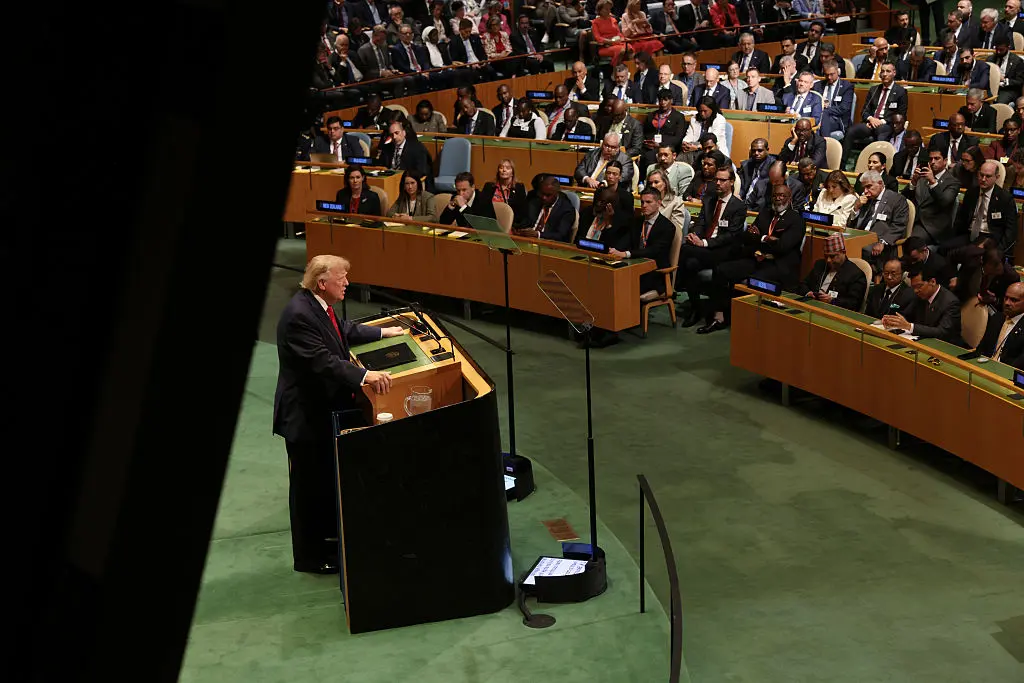
At the United Nations General Assembly in New York on September 22, 2026, President Donald Trump dismissed the idea of creating an international organization to oversee artificial intelligence development. He argued that such a body would hinder American innovation and asserted that the United States already leads the world in AI advancement. Speaking to world leaders, Trump emphasized that national sovereignty and domestic innovation should guide AI policy rather than multinational regulation.
Latest news
 President Trump Declares Force the Path to Peace at UN Assembly
 China’s Clean Energy Exports Surge Amid Iran Conflict, Boosting Xi’s Leverage in U.S. Talks
 Carney Commits $100 Million to Palestinian Aid at
 Family Claims Neglect Led to Death of Costa Rican Detainee in ICE Custody
Trump framed his opposition as a defense of American technological leadership, claiming that U. S. companies and research institutions are at the forefront of breakthroughs in machine learning, automation, and AI applications. He warned that ceding oversight to a global entity could slow progress and allow less innovative nations to influence rules that disadvantage American interests. The president reiterated his administration’s preference for voluntary industry standards and light-touch regulation, contrasting this approach with what he described as bureaucratic overreach by international bodies.
How Would Other Nations Respond to a U. S.-Led AI Approach?
Trump argued that the United States has invested more in AI research and development than any other nation, citing private sector funding and defense-related projects as key drivers. He claimed that American universities produce the majority of top AI talent and that Silicon Valley remains the global hub for innovation. According to the president, imposing external constraints would undermine this ecosystem and risk transferring technological advantage to competitors. He also suggested that some nations seeking global AI governance may aim to limit U. S. growth in strategic sectors like defense and surveillance.
Several diplomats at the UN noted that European and Asian allies have advocated for coordinated AI safety standards to address risks such as deepfakes, autonomous weapons, and algorithmic bias. While acknowledging U. S. capabilities, some officials expressed concern that a lack of common frameworks could lead to regulatory fragmentation and increased global tensions. Others pointed out that AI systems often operate across borders, making unilateral oversight difficult to enforce in practice. Despite these views, Trump maintained that American leadership would naturally shape global norms through innovation rather than agreement.
What did Trump say about the U. S. role in AI development? He stated that the United States is the world leader in AI innovation and does not need international oversight to maintain that position.
Frequently Asked Questions
Why does Trump oppose a global AI oversight entity? He believes it would slow innovation, impose unnecessary restrictions, and allow other countries to influence policies that could harm American technological and economic interests.
How might other countries view the U. S. stance on AI governance? Some allies support international cooperation on AI safety, warning that fragmented approaches could increase risks and reduce accountability in cross-border AI applications.