Fiscal Policies and Market Sentiment
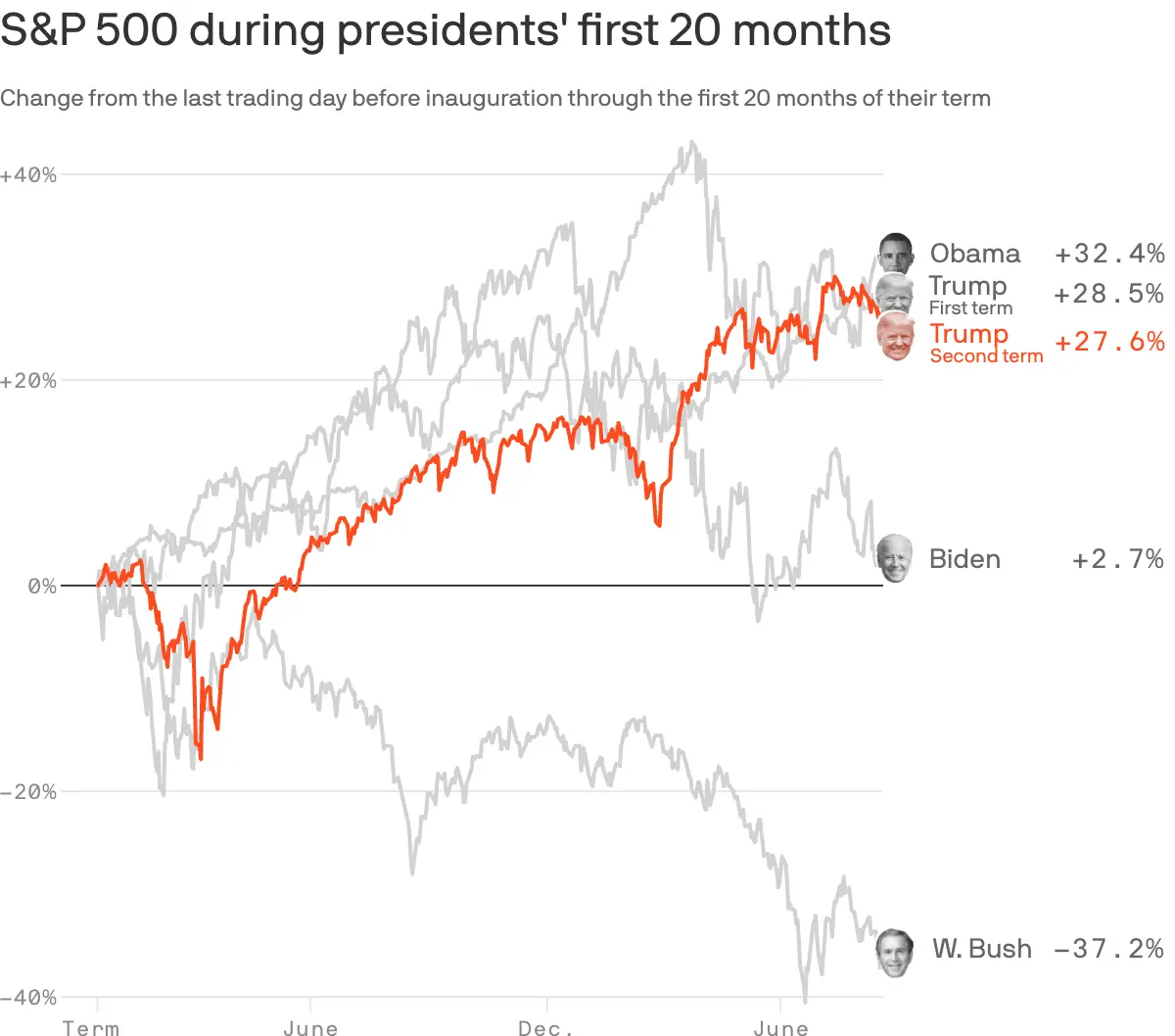
The U. S. stock market surged during the first 20 months of President Donald Trump’s second term, yet it lagged slightly behind the performance of the same stretch in his first administration. Data from Financial Modeling Prep shows the S&P 500 rose sharply, but the gain was modest compared to the earlier period. Trump often touts market strength as a sign of a healthy economy, a view not universally shared by economists.
Latest news
 North Korea Fires Two Ballistic Missiles Over the Sea, Intensifying U.S. Tensions
 Liberal Democrats unveil two billion pound fuel tax cut plan
 Reversal for CDU in Two German State Elections
 The Deportation Project: Inside Trump Administration's Secret Agreements
Analysts point to a blend of policy continuity and new challenges that shaped the market’s trajectory. The administration’s tax cuts and deregulation measures continued to buoy equities, while trade tensions and pandemic‑related disruptions introduced volatility. Investors responded to fiscal stimulus and corporate earnings, but concerns over inflation and monetary tightening tempered enthusiasm. The chart compiled by Erin Davis of Axios Visuals highlights the market’s upward trend, though the slope is less steep than in 2017‑2019.
The second term’s fiscal agenda mirrored many of the tax reforms enacted in 2017, sustaining corporate profitability and encouraging stock buybacks. Companies reported robust earnings, reinforcing investor confidence. However, the administration’s approach to trade—particularly negotiations with China and Europe—added uncertainty. Market participants weighed the benefits of reduced tariffs against the risk of retaliatory measures, leading to occasional sell‑offs.
Will the Market Remain a Barometer for Trump’s Economic Legacy?
Economists argue that equating stock market performance with overall economic health is misleading. While equity prices reflect corporate expectations, they do not capture wage growth, employment quality, or income inequality. Critics note that the market’s gains were concentrated in large‑cap tech firms, leaving many sectors lagging. Moreover, the Federal Reserve’s shift toward higher interest rates in late 2022 raised borrowing costs, pressuring valuations.
The question of whether the stock market will continue to serve as a proxy for Trump’s economic legacy remains open. If the administration maintains a business‑friendly stance, equities could keep climbing, especially if inflation eases and consumer confidence rebounds. Conversely, any escalation in trade disputes or a tightening monetary policy could reverse gains.
Looking ahead, the market’s direction will hinge on policy signals, global economic conditions, and corporate performance. Investors will monitor upcoming budget proposals, trade negotiations, and the Federal Reserve’s actions. A sustained rally could reinforce Trump’s narrative of economic success, while a downturn might undermine it and fuel criticism from opponents.
Frequently Asked Questions
Did the stock market perform better in Trump’s first or second term? The market rose in both terms, but the increase during the first 20 months of the second term was slightly lower than during the same period of his first term.
Why does Trump link the stock market to the overall economy? He views market strength as evidence of business confidence and economic growth, a message that resonates with his pro‑business platform.
What factors could cause the market to falter in the near future? Potential triggers include heightened trade tensions, rising inflation, and further interest‑rate hikes by the Federal Reserve, all of which could dampen investor optimism.