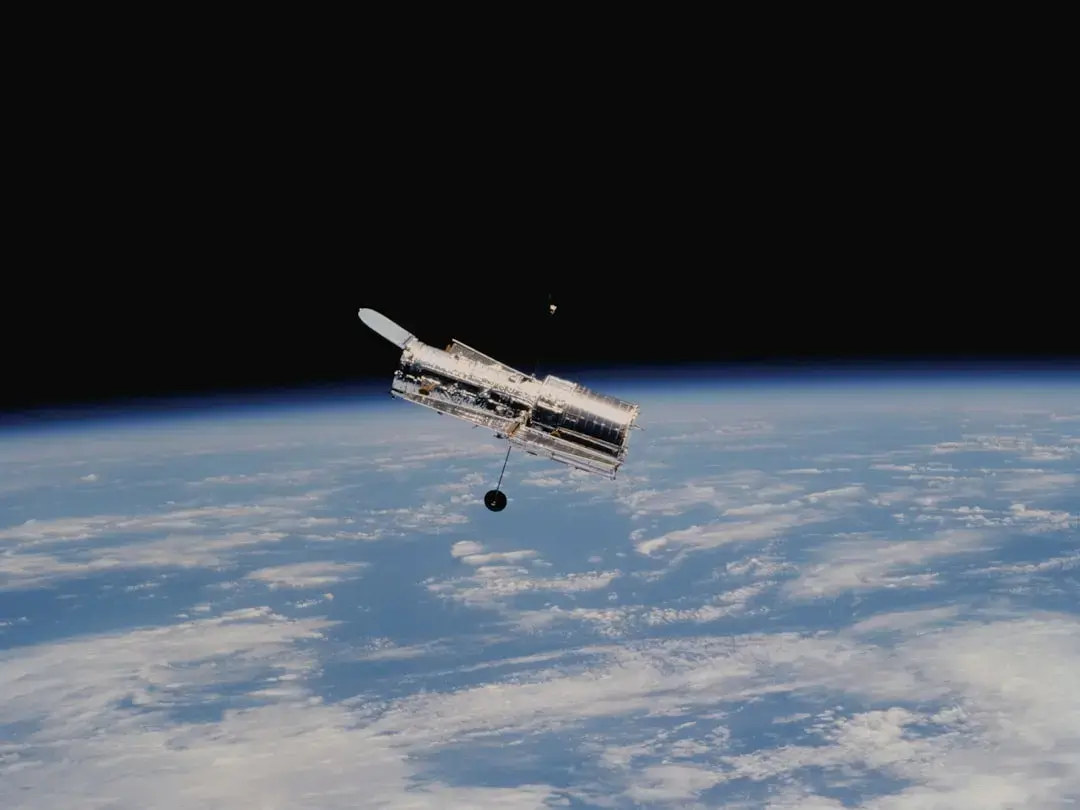
Infrared Eyes Reveal a Hidden Ocean
On July 30, 2026, the James Webb Space Telescope announced the discovery of a potential habitability marker—water—in the atmosphere of a far‑off planet. The finding comes from an international team of astronomers using JWST’s infrared instruments, and it marks a milestone in the search for life beyond Earth.
Latest news
 Ukraine Strikes Persist While Russian Polling Stations Open for Election
 Macron Calls French Party Leaders Together as Energy Costs Surge Amid Iran and Ukraine Conflicts
 US Voters Oppose War on Iran, 71% Say Trump Administration Lacks Strategy
 French President Warns of Rising Russian Hybrid Threats to Europe
The detection was made by analyzing the planet’s spectrum for absorption features that match water vapor. JWST’s unprecedented infrared sensitivity allows it to peer through clouds and dust that hide such signatures from other telescopes. Researchers say the result opens a new chapter in exoplanet science, offering a direct glimpse of conditions that could support life.
JWST’s instruments capture light that ordinary telescopes cannot see, especially the thermal glow of distant worlds. By splitting this light into its component colors, scientists identified a distinct dip at wavelengths where water absorbs energy. „The signal is clear enough to say we are seeing water vapor,” said lead researcher Dr. Maya Patel. The planet, located about 150 light‑years from Earth, orbits a Sun‑like star and lies within the so‑called habitable zone where liquid water could exist on its surface.
Could This World Support Life?
The team cross‑checked the data against models of atmospheric chemistry to rule out false positives. Simulations showed that the observed spectrum aligns best with a water‑rich atmosphere, possibly accompanied by clouds and a temperate climate. This finding builds on earlier JWST studies that detected carbon‑based molecules on other worlds, but water is the most compelling indicator of habitability.
The presence of water does not guarantee life, but it raises the probability that the planet could host it. Water is essential for known biological processes, and its detection suggests the planet may have a stable climate. „We are still far from confirming life,” warned astrobiologist Dr. Luis Ortega, „but this planet is now a prime target for future observations.”
Scientists plan to use JWST’s upcoming observation cycles to search for additional biosignatures such as methane or oxygen. If those gases appear alongside water, the case for life would strengthen dramatically. Meanwhile, the discovery fuels public imagination and justifies continued investment in space telescopes that can explore distant atmospheres.
The breakthrough signals a shift toward detailed planetary characterization rather than mere detection. As more worlds are surveyed, astronomers expect to refine the criteria for habitability and perhaps one day pinpoint a truly Earth‑like environment. JWST’s success demonstrates that humanity’s quest to answer the age‑old question—are we alone?—is entering a data‑rich era.
Frequently Asked Questions
What does the water detection actually mean? It indicates that water vapor is present in the planet’s atmosphere, a key ingredient for life as we know it, but not proof of life itself.
How reliable is JWST’s infrared measurement? JWST’s instruments are calibrated to detect minute spectral features, and the result has been validated against multiple atmospheric models.
What are the next steps for studying this planet? Researchers will schedule deeper spectroscopic observations to search for additional gases like methane or oxygen that could hint at biological activity.