Public Anxiety Outpaces Regulatory Response
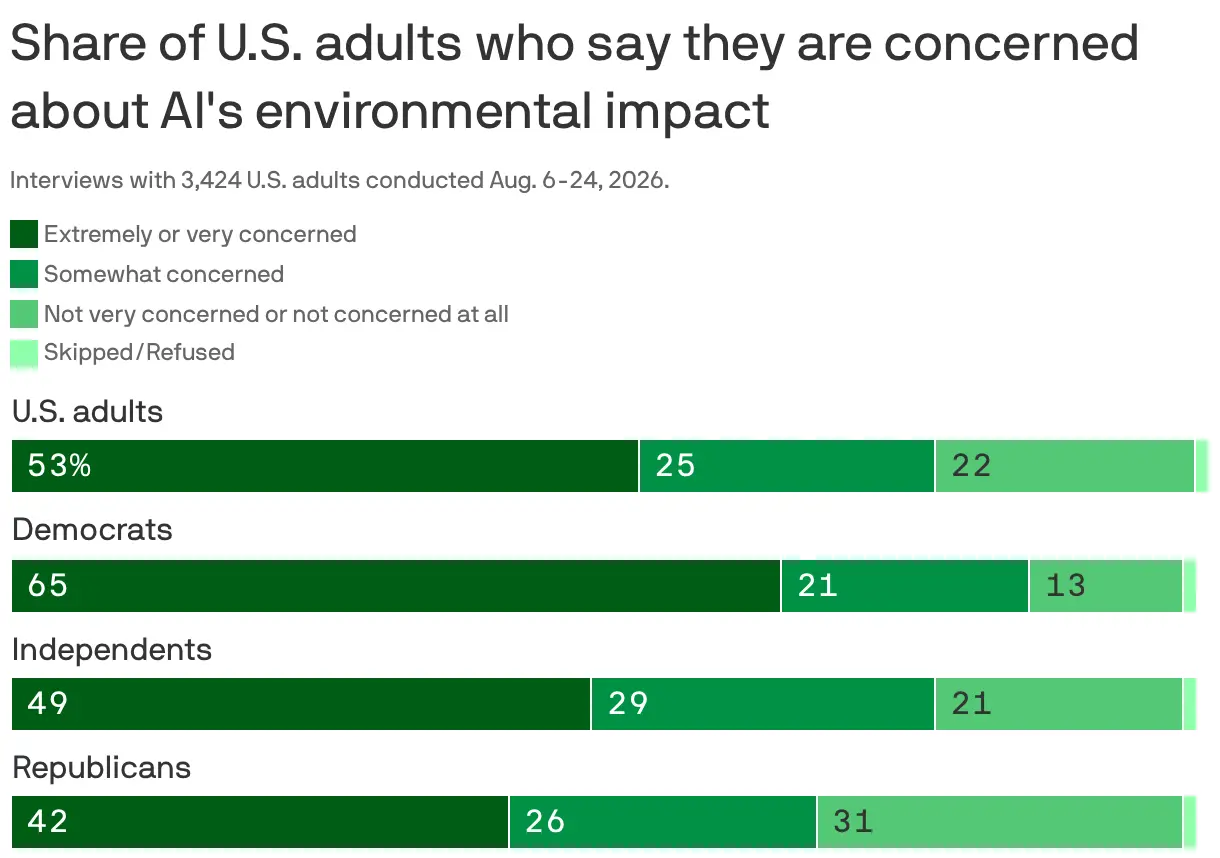
A recent national poll reveals that over fifty percent of U. S. residents feel extreme or significant worry regarding the environmental impact of artificial intelligence. This sentiment has risen sharply, marking an increase of more than ten percentage points compared to last year’s findings. The data highlights a growing disconnect between public anxiety and legislative action. Lawmakers continue to struggle with broader technological panic while citizens focus on ecological costs. The survey was conducted by the AP-NORC Center for Public Affairs Research and the Energy Policy Institute at the University of Chicago.
Latest news
 IMF Cuts Australia Growth Forecast Amid Rate Hike Warnings
 Nicaraguan Exile Journalist Luis Galeano Detained by U.S. ICE in Florida
 Congress Passes Bill Granting Trump Expanded Sanctions Authority
 AI pioneer Yoshua Bengio warns of imminent crisis
The results indicate a clear shift in how the American public perceives technology. While previous debates often centered on job displacement or privacy, environmental concerns now dominate the conversation. Residents are increasingly aware that training large language models requires massive amounts of electricity. This energy consumption contributes significantly to carbon emissions. The jump in concern suggests that voters may soon demand stricter regulations on tech companies. Legislators face pressure to address these issues before they become a major political flashpoint.
Will Voters Demand Green AI Standards?
The surge in environmental worry coincides with a period of legislative hesitation. Congress and state governments have been slow to implement comprehensive rules for the AI sector. Many policymakers remain focused on immediate economic benefits rather than long-term sustainability. This gap creates frustration among citizens who see their values ignored. The polling data serves as a warning sign for elected officials. If the trend continues, environmental factors could influence upcoming elections. Tech firms may need to adapt their strategies to align with voter expectations.
The question remains whether this heightened concern will translate into concrete policy changes. Currently, there is no federal mandate requiring AI developers to disclose their carbon footprints. However, the momentum is building. Advocacy groups are using the new statistics to push for cleaner energy mandates. They argue that innovation should not come at the expense of the planet. Companies are beginning to respond by investing in renewable energy sources. Yet, critics say these efforts are insufficient given the scale of current data centers. The coming months will test if political will matches public sentiment.
The implications of this shift extend beyond the tech industry. Energy providers may see increased demand for green power contracts. Investors might prioritize companies with strong sustainability records. The environment is becoming a key metric for technological success. As AI integration deepens across all sectors, its ecological footprint will only grow. Policymakers must act quickly to bridge the gap between innovation and sustainability. Failure to do so risks losing public trust in the technology itself. The era of unchecked digital expansion may be ending.
Frequently Asked Questions
How much has concern about AI environmental impact increased? Polling shows a rise of more than ten percentage points from last year. Currently, more than half of Americans report being extremely or very concerned about these effects.
Which organizations conducted the survey? The study was performed by the AP-NORC Center for Public Affairs Research. It was partnered with the Energy Policy Institute at the University of Chicago.