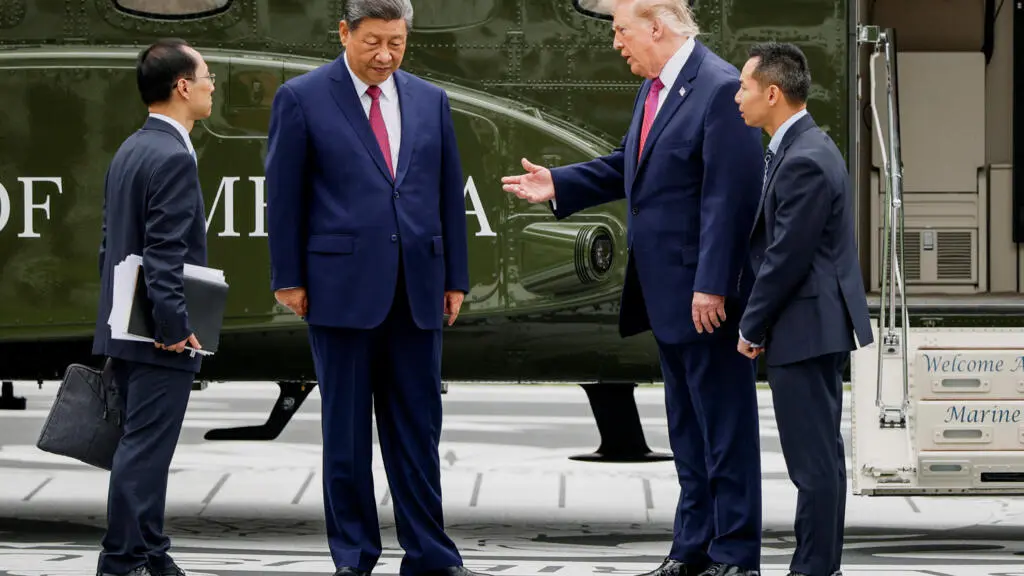
Sovereignty Over Shared Standards
President Donald Trump and Chinese leader Xi Jinping met to discuss artificial intelligence. They explicitly dismissed proposals for international regulatory frameworks. The two leaders emphasized national sovereignty over global coordination. This decision highlights a growing divide in tech governance.
Latest news
 Ukraine's military shifts focus to new tactics and cutting-edge technologies
 European Nations Launch Relief Measures to Combat Rising Fuel Costs
 Colombia Formally Severs Diplomatic Relations With Iran Over Security Concerns
 US-Led Board Engages UNRWA Despite Exclusion Stance
The summit focused on strategic competition rather than cooperation. Both nations view AI as a critical economic asset. They rejected calls for a unified global standard. Instead, they prioritized domestic development goals. This approach leaves other countries without clear guidelines.
The meeting underscored a shift toward unilateral control. Leaders argued that global oversight hinders innovation. They cited the need for rapid technological advancement. No binding agreements were signed during the talks. Diplomatic channels remain open for future dialogue. However, immediate regulatory alignment is off the table.
Who Controls the Future?
Critics argue this creates a fragmented landscape. Different regions will develop distinct AI rules. This may complicate cross-border data flows. Businesses face uncertainty in compliance requirements. The lack of shared safety standards raises concerns. Ethical guidelines remain inconsistent across borders.
The US and China continue to dominate the sector. Their combined investment dwarfs other nations. This dominance influences global market dynamics. Smaller economies struggle to compete independently. They often align with one of the two giants. This creates a binary choice for many partners.
The absence of global rules invites speculation. Will safety protocols be ignored for speed? Industry leaders warn of potential risks. Unregulated development could lead to unintended consequences. Public trust in AI systems may erode. Governments face pressure to respond to citizen fears.
The summit results reflect broader geopolitical tensions. Technology policy is now a statecraft tool. Economic interests outweigh ethical considerations for many. This trend mirrors previous tech disputes. It signals a long-term strategic rivalry. The outcome affects millions of users worldwide.
Frequently Asked Questions
Did the leaders agree on any AI rules? No, they rejected global oversight. They prioritized national control over shared standards.
What does this mean for businesses? Companies face a fragmented regulatory environment. Compliance strategies must adapt to regional differences.
Is international cooperation completely dead? Not entirely, but it is severely limited. Future talks may focus on specific technical issues.