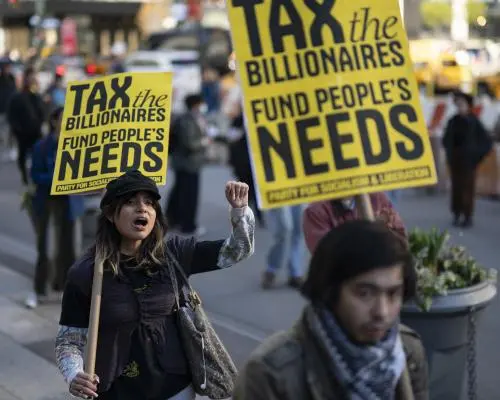
The Super‑Rich as Architects of Authoritarianism
A new book by Naomi Klein and Astra Taylor, titled End Times Fascism , offers a stark examination of how the unchecked power of the super‑rich fuels a dangerous brand of nationalism. Published in 2023, the work has sparked debate across political circles, urging readers to confront the growing threat of authoritarianism in the 21st century.
Latest news
 Why My Kyiv Visit Worried Me So Much
 FBI Director Kash Patel to Testify Before Senate Judiciary Committee on Oversight Matters
 Hochul’s how-to guide to stopping ICE
 First Parliamentary Vote Marks End of Decades‑Long Conflict in Muslim Philippines
Klein and Taylor argue that as radical right‑wing nationalists gain influence, their destructive policies risk becoming mainstream. They highlight the alarming example of a world leader who, while overseeing the largest nuclear arsenal, casually threatened that „a whole civilisation will die tonight.” Such rhetoric, the authors claim, normalises extreme violence and erodes democratic safeguards.
The authors trace the rise of this ideology to a confluence of economic inequality, media manipulation, and political polarization. They point out that the super‑rich have the resources to shape public discourse, fund extremist movements, and undermine institutions designed to protect civil liberties. By doing so, they create a climate where radical ideas can flourish without significant opposition.
Can Progressive Movements Counteract This Trend? (and How)
Klein and Taylor detail how wealthy elites use their financial clout to influence policy and public opinion. They argue that this influence is not limited to lobbying; it extends to funding think tanks, media outlets, and political campaigns that push nationalist agendas. The authors cite examples of how corporate donations have helped elect leaders who champion hardline stances on immigration, trade, and national security. This financial backing, they contend, allows extremist groups to operate with impunity and to spread propaganda that normalises violence.
The book also examines the role of social media platforms, which, according to the authors, have become echo chambers for radical rhetoric. Algorithms that prioritize sensational content amplify extremist voices, making it easier for the super‑rich to disseminate their messages to a global audience. Klein and Taylor warn that this digital environment creates a feedback loop, where fear and anger are amplified, and dissenting voices are drowned out.
Klein and Taylor propose a „progressive toolkit” for repairing the damage caused by unchecked wealth and authoritarian rhetoric. They emphasize the importance of grassroots organizing, coalition building, and policy advocacy. The authors argue that by uniting diverse groups—labor unions, environmental activists, and civil‑rights organizations—progressives can create a counter‑balance to the power of the super‑rich. They also stress the need for transparent governance, stronger regulatory frameworks, and public financing of elections to reduce corporate influence.
The Consequences of Inaction
The book highlights successful examples of collective action, such as the global climate strikes and the push for corporate accountability in the United States. By showcasing these victories, Klein and Taylor suggest that a coordinated, inclusive approach can effectively challenge the rise of authoritarian nationalism. They urge readers to engage in local activism, support independent journalism, and demand policy reforms that protect democratic institutions.
If the trends outlined by Klein and Taylor continue unchecked, the authors warn, democratic norms could erode further, leading to increased polarization, civil unrest, and potential conflict. The normalization of extreme rhetoric and the concentration of power in the hands of a few could result in policies that undermine human rights and exacerbate global inequality. The authors call for urgent action, emphasizing that the fightback begins with informed, collective resistance.
In the final analysis, End Times Fascism serves as both a warning and a roadmap. It urges readers to recognize the threat posed by the super‑rich and radical nationalism, and to mobilise collective power to safeguard democratic values.
Frequently Asked Questions
What is the main thesis of End Times Fascism ? The book argues that the growing influence of the super‑rich fuels radical right‑wing nationalism, normalising extreme violence and eroding democratic safeguards.
How do the authors propose to counteract this influence? They advocate for grassroots organising, coalition building, transparent governance, and public financing of elections to reduce corporate power and protect democratic institutions.
What are the potential consequences of ignoring the authors’ warnings? Continued inaction could lead to further erosion of democratic norms, increased polarization, civil unrest, and policies that undermine human rights and global equality.