
Such reforms, the writer suggests
An elderly Russian observer critiques Western commentary on Kremlin politics, arguing that analysts mistake surface-level democratic facades for genuine authoritarian control. Writing in response to a September 16 article, the author contends that Russia’s leadership has long admired and selectively copied elements of Western democracy while maintaining firm control over power structures. This perspective frames current political dynamics as a continuation of historical patterns rather than a sudden deviation. The core argument centers on the idea that what Western observers interpret as democratic aspirations in Russia are, in fact, carefully managed imitations designed to legitimize authoritarian rule. The author points to the 1861 emancipation of the serfs under Alexander II as an early example of this duality—reform enacted not from liberal conviction but as a pragmatic measure to preserve imperial stability.
Latest news
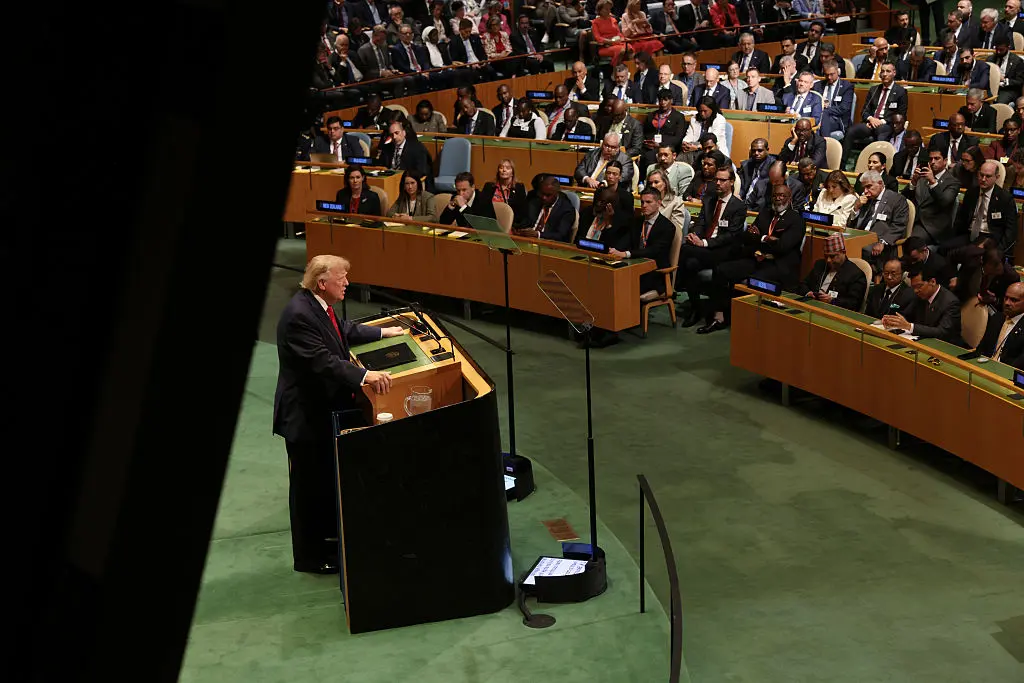 President Trump Declares Force the Path to Peace at UN Assembly
 China’s Clean Energy Exports Surge Amid Iran Conflict, Boosting Xi’s Leverage in U.S. Talks
 Carney Commits $100 Million to Palestinian Aid at
 Family Claims Neglect Led to Death of Costa Rican Detainee in ICE Custody
Such reforms, the writer suggests, were never intended to foster genuine pluralism but to strengthen the state’s grip by preempting unrest through controlled change. How Reform Serves Control Rather Than Liberation Historical precedents show that Russian leadership has repeatedly introduced limited changes to avert larger upheavals. The abolition of serfdom, while transformative socially, did not lead to political liberalization; instead, it redirected peasant loyalty toward the state and enabled faster military conscription and tax collection. Similarly, later Soviet-era reforms like Khrushchev’s thaw or Gorbachev’s glasnost were initiated not from ideological surrender but from systemic necessity—each aimed at revitalizing the regime by addressing stagnation without relinquishing central authority.
This pattern, the author argues, repeats today: constitutional adjustments
He means that Western analysts focus on visible democratic-like events in Russia—such as elections or public debates—while missing the underlying reality of centralized control and managed outcomes. Why does the author cite Alexander II’s 1861 reforms? To illustrate that even significant historical changes in Russia were driven by state preservation, not liberal ideals, setting a precedent for today’s pragmatic adaptations. Is there any genuine democratic movement in Russia according to the view presented? The author asserts that there has never been a real rebellion the Kremlin needed to suppress, implying that opposition remains contained or co-opted rather than broadly threatening to the regime.