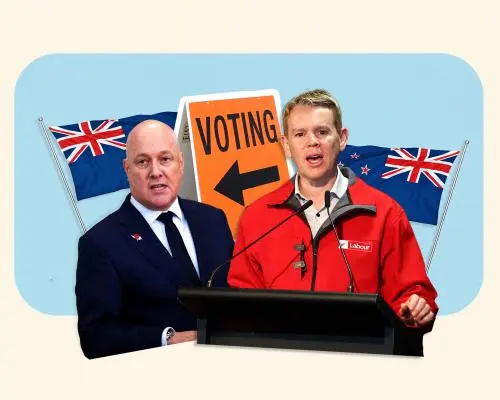
Two Chrise, political gaffes and an identity crisis: what's behind the New
The islanders are so worried about how this uncivil period is perceived globally that it was rumored to be a deliberate strategy. They presented two white men, both named Chris, as options for the next prime minister. Chris is the kind of name that goes unnoticed. It's that member of your indoor netball team that nobody remembers inviting, but who always shows up. This tactic seems to be working.
Latest news
 2026 Midterms Deliver Wave of Historic Firsts in US Politics
 Trump's Legal Team Seeks to Overturn 2024 Hush Money Conviction
 Burnham Seeks New Chagos Deal After US Pushback
 How Nudges Win Wallet Share in the Attention Economy
For those following New Zealand politics from afar, the only observable overlap was the series of gaffes by the incumbent prime minister (Chris 1), a man who seems tailor-made for TikTok. On the other hand, Chris 2's profile includes his occasional passion for a meat tart from a dairy-style shop, an extremely specific New Zealand expression.
A local commentator cynically described this campaign as one where both parties released as little politics as possible to avoid losing the election. The benefit of this boring approach is that anyone planning a trip to Queenstown will continue to believe the locals walk barefoot, arm in arm, singing the Lord of the Rings theme in harmony.
In reality, a simple browse of any local's Facebook pages shows the exact opposite. The sky is about to collapse under the weight of an impending apocalypse if the party that isn't yours wins.
Another consequence of the lack of campaign theme is that it allowed side stories and small parties to flourish. Anyone who has followed New Zealand politics recently would be forgiven for thinking it was simply a referendum about gangs.
In a scene resembling a modern adaptation of the TV series „Yes Minister”, my remote tracking of the event showed that a member of parliament had a photo with several gang members. This caused opposition members to shout „TALKING TO GANGS”, and they responded „NOT TALKING TO GANGS”– and they dismissed the person.
Later, a political lobbying group displayed an advertising board that said „YES, TALKING TO GANGS”. It was then discovered that the party they supported also had many photos WITH GANG MEMBERS.
This was hard to verify because Chris 1 had banned gang uniforms two years prior. Everyone started displaying photos of any legislator with anyone who looked „a bit scary”, declaring them best friends with gangs. The only winner of that chaos was the free discussion radio.
While in Australia it is illegal not
The irony of the whole affair was that members of the current government, who were shouting how much they hate gangs and how much they love the law, had simultaneously made a move that created one of the largest groups of law breakers ever seen.
Despite official advice and, frankly, despite democracy, Chris 1 imposed electoral changes to cut the voting registration period by an unusual 13 days before the election.
While in Australia it is illegal not to vote in an election, in New Zealand it is illegal not to register to vote. Previously, you could do this up to the day of voting and even on the day of voting.
This was intended to give all eligible citizens a chance to be part of a functional democracy, regardless of their organizational skills.
However, by moving the date with little warning and almost no awareness campaign, many New Zealanders will find themselves in the same situation as the very gangs the governing party claims to hate.
Anyone who has moved to a new house or another country, or was removed from the electoral roll for minor and often accidental reasons, will now find themselves part of a crime statistic.
Although early voting has begun for those Chris 1 left to vote, Saturday New Zealand will decide which of the Chrise will rule them all – because, some might argue, having both in charge would be a constitutional crisis.
Clarke Gayford is a New Zealand TV presenter who now lives in Australia. He won two Emmy awards for the film Prime Ministerand presented the award-winning series Fish of the Day.