Officials admit to running out of ideas
Irish Energy Minister Darragh O’Brien told reporters that neither Brussels nor national governments hold a magic wand to reverse price hikes. Gas prices in Europe jumped above €100 per megawatt-hour on Wednesday, the first time since 2022. This spike was driven by last-minute panic buying to fill European gas reserves, adding to supply pressures from the Middle East conflict. At Friday’s meeting, EU energy ministers broadly acknowledged that both Brussels and national capitals have exhausted ideas to contain price pressure. „We have exhausted most short-term options,” said a senior EU energy official, who requested anonymity to offer a candid perspective. „What remains is essentially crisis management.” In the past year, government attempts to cushion price hikes through renewable energy schemes, windfall taxes, and costly fuel subsidies have failed to contain anxiety, leading to widespread protests across the continent.
Latest news
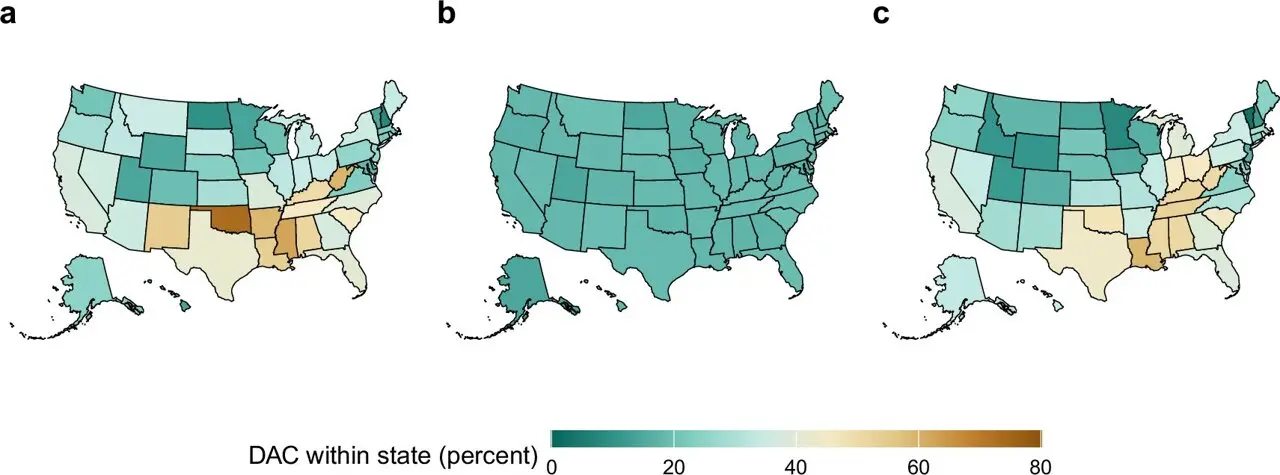 Rural communities may be left out of public support programs because screening tools measure disadvantage in ways that overlook their specific needs
 Brazilian Election Reveals the Donroe Doctrine Is a Mirage
 Is 2026 the year democracy finally fought back?
 US Midterm Elections: Europe Watches as America Heads to the Polls
Behavioral change over forced cuts
Mika Nykänen, Finland’s State Secretary for Energy, said he does not want to see people restricted. Instead, he called for policies designed to „change behavior” and reduce energy consumption less painfully. „Industry does it naturally. Ordinary households, ordinary families — they sometimes need encouragement,” he said. „For example, subsidies for investments in home and window energy efficiency.” Wojciech Wrochna, Poland’s State Secretary for Energy, explained that reducing demand „has an impact on industry, has an impact on businesses and in a difficult situation, it could be the way to do it. But it does not... solve it in the long term.” Ebba Busch, Sweden’s Energy Minister, asserted that high prices „will regulate demand of their own accord.”
Given the opposition to demand-reduction measures on Friday, Dan Jørgensen — who warned at the meeting about a „difficult” winter with rising fuel prices — dropped his own proposal, focusing instead on subsidies. He accepted that such subsidies could cover both fossil fuels and clean alternatives, but urged them to be „targeted and temporary.” Since the war began, governments have paid €18 billion in tax shields on fossil fuel products, including Rome’s controversial move earlier this month to reduce the impact of gas prices on electricity costs. European Commission President Ursula von der Leyen warned national leaders against this trend, urging them at this month’s meeting to keep policies temporary and targeted, to avoid unintentionally increasing fossil fuel demand and distorting the EU single market, according to two EU diplomats familiar with her comments.
Subsidies and fiscal flexibility
This remains a point of disagreement among EU leaders, with some countries, including Greece, asking for more fiscal headroom to increase energy subsidies, while others warn about the dangers of subsidizing fossil fuels. „Our concern is to make sure we do not create conditions where different member states go very far in national decisions,” said Lukas Savickas, Lithuania’s Energy Minister, in a separate interview. Jørgensen did not answer a POLITICO question at a later press conference when asked if new fiscal flexibilities were being considered.
Other ideas remain on the sidelines
Other ideas stayed on the sidelines. Von der Leyen rejected countries’ requests to set an EU-level tax on windfall profits of oil and gas companies at this month’s meeting, according to the diplomats cited above, even as European oil companies like Shell, TotalEnergies, and Repsol are collecting their biggest profits since 2022. Member states also questioned the value of a Commission proposal to coordinate energy procurement purchases. Such an arrangement would work in theory, but would be hard to implement for „big players” with established supply chains, said Wrochna. Neither the EU’s commitment to accelerate the release of strategic crude oil and diesel reserves at the start of this month — a response to what EU officials described as US „blackmail” — did much to ease fuel costs.
However, the EU commitment will now include over 40 million barrels, more than the 10 million barrels promised by Paris, said Roland Lescure, France’s Economy Minister, to reporters on Friday. A parallel attempt to delay methane monitoring requirements — a pillar of the EU Green Deal for 2024, which industry considered poorly designed and which would disrupt procurement — had no impact on prices.
Slow results
As measures designed to lower electricity prices and encourage consumers to move away from imported fossil fuels begin to work, with rising sales of heat pumps and electric vehicles in Europe this year. „There is no miraculous solution, but when you add all these things together, they can actually matter,” said Jørgensen. But even long-term efforts to encourage the shift to cleaner energy face pushback, as countries resist ceding power to Brussels. One example is a Commission proposal to make fact