He also notes that societal pain is often absorbed through delayed
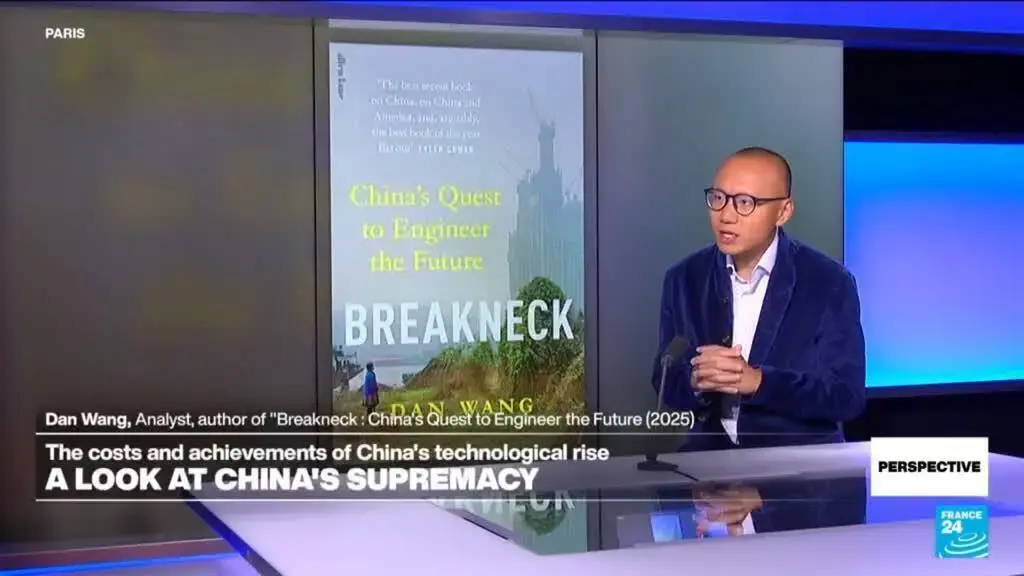
France 24's Stuart Norval interviews China analyst Dan Wang about the resilience of China's economic and social systems amid growing public strain. The discussion explores how the country maintains stability and growth even as citizens face mounting pressures from economic slowdowns, demographic shifts, and social restrictions. Wang argues that China's ability to adapt through centralized control and targeted policy interventions allows it to endure challenges that might destabilize other nations. The conversation delves into Wang's analysis of China's dual-track approach: maintaining strict political oversight while selectively liberalizing economic sectors to spur innovation and investment. He highlights how local governments are given flexibility to experiment with policies, creating a feedback loop that informs national strategy without undermining party authority. This system, Wang suggests, enables Beijing to manage crises like youth unemployment and regional debt by adjusting tactics locally while preserving overarching control.
Latest news
 Houthi Rebels Issue New Threats Against Saudi Military Infrastructure
 Houthi Rebels Seize Strategic Hanish Islands in Red Sea
 Global Markets Stumble as AI Leaders Call for Development Slowdown
 AI Takes Control of Clinical Eye Screenings in China
He also notes that societal pain is often absorbed through delayed gratification narratives, where citizens are encouraged to endure hardship for long-term national rejuvenation. How does China balance repression with economic dynamism? Wang explains that the Chinese Communist Party prioritizes stability above all, using surveillance and censorship to suppress dissent while allowing market mechanisms to function in designated zones. He points to special economic zones and tech hubs like Shenzhen and Hangzhou as examples where innovation thrives under a controlled environment. These areas attract talent and capital by offering operational freedom, yet remain politically aligned with Beijing's goals.
The analyst stresses that this balance is not accidental but a deliberate
The analyst stresses that this balance is not accidental but a deliberate feature of China's governance model, designed to extract economic benefits without risking political liberalization. Can public dissatisfaction threaten the system long-term? While acknowledging rising frustration among young people over job prospects and housing costs, Wang argues that China's system includes built-in pressure valves, such as propaganda campaigns promoting national pride and historical destiny. He notes that unlike in democratic societies, there is no expectation of immediate redress for grievances, which reduces the likelihood of organized opposition. However, he warns that if economic pain becomes widespread and persistent—especially if it affects urban middle-class families—the legitimacy of the system could face deeper challenges. For now, Wang concludes, the combination of ideological control, economic performance, and social management keeps the system functioning, even as the strain on society grows.
Frequently Asked Questions What is Dan Wang's main argument about China's resilience?
Dan Wang argues that China's system works because it combines centralized political control with localized economic experimentation, allowing the government to adapt to crises without sacrificing authority or triggering instability. How does China manage public discontent without democratic channels? China uses propaganda, surveillance, and selective economic relief to manage dissatisfaction, channeling public sentiment toward national goals while suppressing organized dissent through strict information control. What risk could undermine China's current model according to Wang? If economic hardship spreads beyond vulnerable groups to affect the broader urban middle class over a prolonged period, it could erode public patience and challenge the system's long-term legitimacy.